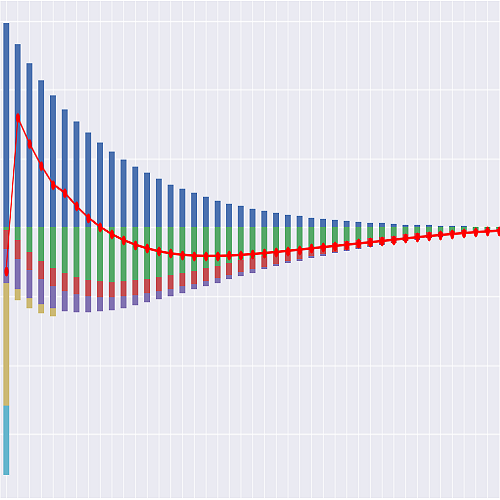
Product Specification#
Status: Draft, 2026-09-03 (every cited source accessed 2026-09-03).
Scope note. This is a standardized composite specification assembled for reference liability cash-flow modelling of a Korean cancer insurance (암보험, am boheom) contract — a fixed-benefit (정액, jeongaek) 제3보험 (je-sam boheom, third-sector) policy whose benefits are triggered by the diagnosis of a disease named in a schedule keyed to the KCD (한국표준질병·사인분류, the Korean Standard Classification of Diseases), and secondarily by cancer surgery, cancer inpatient days and anti-cancer drug or radiation treatment. It describes no single insurer’s contract, and it must not be read as one.
Facts carrying a source tag — [S#] (primary product documents: 보험약관 (boheom yakgwan,
policy conditions), 상품요약서, 상품 공시 페이지) and [R#] (product-specific regulatory,
actuarial, statistical and legal references), both numbered per _research/cancer.md and
resolved in sources.md in this directory (numbering frozen, never renumbered), and [REG-R#]
(the cross-product reference library references/regulatory-and-actuarial-references.md, whose
own R-numbering is distinct and also frozen) — name the document the claim was read from.
Values marked std are standardizations introduced for the reference implementation; each
std row carries a numbered footnote giving the rationale and, where the research file
brackets it, the range observed across insurers. Claims no retrieved document could confirm are
flagged unverified.
The composite is drawn from seven carriers: one 손해보험 (non-life) writer’s contract in
two editions eight years apart, so that what changed is visible [S1] [S2]; three contracts
from one 생명보험 (life) writer — a non-renewable stand-alone main contract [S3], a 23-module
renewable product [S4] and a treatment-cost-only product [S5]; two from a second life writer,
one of which has no waiting period at all [S6] [S7]; and one non-life product page carrying
the session’s only published premium and surrender-value illustration [S8]. Two carrier
documents are consumer-education rather than contractual [S9] [S10], and Korea’s largest life
insurer is not represented by any product document: its product page returned a JavaScript
shell [S11]. Company and branded product names appear only in sources.md and in
_research/cancer.md.
What this document defines for the rest of krlib. Cancer_KR_S is the library’s
fixed-benefit 제3보험 chassis, and five mechanics are specified here once, in full, so that
LTC_KR_S (간병보험) and Child_KR_S (어린이보험) can state deltas against them rather than
restate them:
Diagnosis-triggered lump sums graded by a tier ladder — 고액암 above, 일반암 in the middle, 특정소액암 and 유사암 (yusa-am, “similar cancers”) below — where the tier is decided by a public statistical classification incorporated by reference, not by a clinical definition the insurer writes for itself.
The 90-day 면책기간 (myeonchaek gigan, waiting period) before cover starts, and its four carve-outs. A diagnosis inside it does not merely go unpaid: it makes the affected cover 무효 (muhyo, void), with premiums returned.
The 감액기간 (gamaek gigan, reduced-benefit period) — a stated fraction of the benefit for the first one or two years — sitting on top of the waiting period as a second, softer anti-selection device.
The 유사암 reduced tier, at a stated fraction of the general-tier amount, which is what lets a product cover a fast-growing, high-survival decrement without repricing.
A post-diagnosis survival model. This is the mechanic that distinguishes a cancer contract from a death contract: the diagnosis benefit is not the end of the liability. The premium waiver runs from the diagnosis until 납입완료 or death, the inpatient, surgery and treatment benefits are incurred over months and years after it, and a 재진단암 clock only opens two years later. An incidence rate alone cannot say for how long any of that runs.
The incidence basis is published, which no other morbidity product in this library can say: 보험개발원 displays a dated 「기타피부암 및 갑상선암 이외의 암 발생률」 grid by age and sex on the insured definition of cancer R5 REG-R61, and the shipped table reproduces it. It is reconciled below against 국가암등록통계 age-specific incidence and five-year relative survival R1 REG-R40, which is also what the tiers the bureau does not publish are derived from. Where a rate is nevertheless standardized, it is marked std and the public quantity it is anchored on is named.
Deltas the two inheriting products will state. LTC_KR_S replaces the KCD-keyed diagnosis
trigger with a statutory one, the 노인장기요양보험 등급 REG-R54 REG-R55, and replaces
the lump sum with a continuing annuity, so its post-onset survival model is the whole product
rather than a correction to it. Child_KR_S inherits the tier ladder and the 감액기간 but
disapplies the 면책기간 below 보험나이 15 [S2] R3 R6, carries no death benefit below
age 15 by force of 상법 제732조 REG-R50, and runs on a paediatric incidence curve two orders
of magnitude below the adult one R1.
Product overview and market role#
제3보험, and why both sides of the market write the same contract#
Korean law does not treat sickness and injury cover as a species of indemnity insurance. It makes them a third class of insurance product in their own right. 보험업법 제2조제1호 splits 보험상품 into 생명보험상품, 손해보험상품 — expressly excluding 「다목에 따른 질병ㆍ상해 및 간병」 — and 제3보험상품, being cover 「사람의 질병ㆍ상해 또는 이에 따른 간병에 관하여」 REG-R1. 제4조제1항제3호 lists the three 보험종목 of 제3보험업: 상해보험, 질병보험, 간병보험 REG-R1 R8. Cancer insurance is 질병보험.
The provision that makes the class a shared field is 제4조제3항: a licensee for the whole of 생명보험업, or for the whole of 손해보험업 excluding 보증보험 and 재보험, 「제3보험업에 해당하는 보험종목에 대한 허가를 받은 것으로 본다」 REG-R1 R8. A life insurer and a non-life insurer therefore write the identical cancer contract without a further licence, and the retrieved documents bear that out at the level of the clause: [S1] [S2] [S8] are non-life contracts and [S3] [S4] [S5] [S6] [S7] are life contracts, carrying the same benefits, the same definitions and the same 면책기간. 감독규정 제7-61조 applies the whole of the 제3보험 design rule 제7-63조 to 장기손해보험, so the two are designed identically by regulation and not merely by convention REG-R17.
Private-law recognition arrived late and thinly. 상법 제739조의2 (질병보험자의 책임) and 제739조의3 (준용규정) were both 신설 2014-03-11 REG-R50 R7; before that a disease contract was construed by analogy to life and accident cover, which 제739조의3 now says expressly. There is no 질병보험 chapter of substance: the contract law of this product is borrowed law, and its detail lives in the 약관 and in the 표준약관 REG-R25.
The public scheme underneath, and why the product is 정액 rather than indemnity#
Korea’s cancer product is not a bill-reimbursement product, and the reason is statutory. A registered cancer patient pays 5% of the total 요양급여비용 for five years from registration, inpatient and outpatient alike, under 국민건강보험법 제44조제1항, 시행령 제19조제1항 및 별표 2, and 「본인일부부담금 산정특례에 관한 기준」 제4조 및 별표 3, extendable where residual, metastatic or recurrent disease is under continuing chemotherapy R11. On top of that sits the 본인부담상한제 of 제44조제2항, which refunds annual co-payments above an income-graded ceiling REG-R53.
With the scheduled bill already capped at 5%, there is very little bill left to indemnify. Every retrieved contract pays 보험가입금액 (boheom gaipgeumaek, the sum insured) or a stated fraction of it on a defined event, and none of them indemnifies a cost. What the lump sum replaces is stated by the research institute rather than by the carriers: 「암은 통상적으로 치료기간이 길고 치료비용이 많이 발생하며 간병비 등 부대비용과 암을 치료하는 기간 동안 경제활동을 하지 못함으로 인하여 발생하는 소득 감소분까지 감안하면」 R3. It is an income-and-incidentals benefit wearing the clothes of a medical one.
That also fixes where the residual exposure sits. The public scheme’s boundary is a negative
list — 요양급여 covers everything the Minister has not designated 비급여 REG-R53 — and it
is that residual which Korea’s other health product, Medical_KR_S (실손의료보험), pays.
Cancer_KR_S is deliberately blind to the 급여/비급여 boundary, which is why the two sit
beside each other in almost every Korean household’s portfolio without overlapping.
One dated cost anchor exists and is quoted with its date: 국립암센터’s 2009 release put the average per-patient economic burden at ₩29,700,000 (2,970만원), highest for leukaemia at ₩67,000,000, then 간암 ₩66,200,000, 췌장암 ₩63,700,000, 폐암 ₩46,600,000 R3; a carrier repeats a ₩50,000,000-plus figure for 고액암 without a date [S9]. Both are historical, and the composite’s ₩30,000,000 sum insured is standardized rather than taken from either.
Market size and where the line sits#
Korea’s life market is a protection market with a shrinking savings tail — the opposite of
the French and German mixes in frlib and delib. On the research institute’s 2026 forecast,
보장성보험 is 52.8% of life premium against 저축성 at 20.8%, with 보장성 premium rising
from ₩48.6조 (2023) to ₩55.0조 (2024) to a forecast ₩66.2조 (2026) while 저축성 falls from
₩28.1조 to ₩26.1조; on the non-life side 장기손해보험 — overwhelmingly 장기인보험: health,
cancer, care and accident cover written under the 제4조제3항 deeming provision — runs from
₩64.3조 (2023) to a forecast ₩75.9조 (2026) REG-R46 REG-R47. Cancer cover is written
inside both aggregates and no retrieved source splits 암보험 out of them: there is no
Korean analogue of Japan’s per-line policy-count series, and no 암보험 in-force count,
new-business count or market share is asserted anywhere in this document.
What is retrievable is the disclosure architecture that makes the product documentable. The 생명보험협회 공시실 carries 상품비교공시 across eleven protection classes, 경영공시 and 기타공시, and is the public route to 약관, 상품요약서 and 해약환급금 illustrations REG-R45; every [S#] in this folder was reached through it or through a carrier’s own 공시실. A 보장성보험 must publish a 보험가격지수 — 보험료총액 ÷ (참조순보험료 총액 + 보험회사 평균사업비총액) — and a 보장범위지수 in its 상품요약서 REG-R22, so the rate bureau’s reference rates become visible to the public only as a ratio, never as a rate. That is the single most important fact about pricing transparency in this market.
The epidemiology that makes the product modellable, and what it constrains#
The 국가암등록통계 annex is public, dated and complete enough to build an incidence basis from R1 REG-R40. Its 2023 headline: 288,613 new cancers (남 151,126 / 여 137,487), 조발생률 564.3 per 100,000 (남 593.4 / 여 535.5), 연령표준화발생률 522.9 (남 587.0 / 여 488.9) on the 2020 주민등록연앙인구 standard R1, corroborated independently at R2. Lifetime risk of a cancer diagnosis is 41.2% — 남 44.6%, 여 38.2% R1. Four features are load-bearing and each constrains a design choice.
First, the crude and the standardised series disagree violently about trend. The crude rate has risen 161% since 1999 (216.0 → 564.3) while the age-standardised rate has risen 30% (402.7 → 522.9) and has been broadly flat since 2017 R1. A cancer contract written to age 100 is exposed to the crude series, because it ages with its policyholder. That is the quantitative content of the institute’s 추세리스크 warning: 「현재도 암 발생률은 상승하고 있으며, 향후 어느 시점에서 암 발생률 상승이 멈출지는 예측하기 어려움」 R4.
Second, the male and female curves cross, and the crossing point is published. 「50대 초반까지는 여자의 암발생률이 더 높다가, 50대 후반부터 남자의 암발생률이 더 높아지는」 R1. At 40–49 the female crude rate is 2.43× the male (590.0 against 243.0); at 80+ the male rate is 2.25× the female (2,930.2 against 1,304.5) R1. A unisex cancer basis is materially wrong at every age, and wrong in opposite directions either side of about 55. The published reference-rate table crosses at the same place R5.
Third, thyroid cancer is 12.3% of all registered cancers — the single largest site — and its five-year relative survival is 100.2%, statistically indistinguishable from the general population, on a lifetime mortality risk of 0.1% R1. The registry publishes the excluding-thyroid basis explicitly (253,173 cases, 조발생률 495.0, 표준화 454.0), which is what makes a sourced general-tier incidence rate constructible R1. The 유사암 tier is that arithmetic turned into a contract term, and any incidence table that does not separate C73 will misprice the product by a wide margin REG-R40.
Fourth, the insurable event is survivable and the survival is improving fast. Five-year relative survival for 2019–2023 diagnoses is 73.7% all sites (남 68.2 / 여 79.4) and 69.6% excluding thyroid, against 42.9% for 1993–1995 diagnoses R1. Prevalence at 2024-01-01 was 2,732,906 persons — 5.3% of the population — of whom 62.1% were more than five years from diagnosis R1. A benefit menu built around a diagnosis lump sum, a premium waiver and a treatment-linked payment stream, rather than around a death benefit, follows directly; so does the need for a post-diagnosis survival model.
The two chassis in the market, and where the composite sits#
The retrieved contracts fall into two shapes. Diagnosis-centred: the main contract pays a graded diagnosis lump sum and nothing else, with treatment benefits as separate modules — [S3], [S6] and [S7]. Event-centred: the contract pays on surgery, inpatient days and chemotherapy or radiotherapy, and at one carrier there is no diagnosis lump sum at all [S5]. Between them sit the granular non-life contracts, carrying both plus twenty or more named riders [S1] [S2], and the modular product in which twenty-three independent 주계약 modules are sold in any combination [S4]. The composite is diagnosis-centred with the event benefits attached and independently switchable, so that any observed shape is a configuration rather than a different model. The choice is not neutral and the reason is at footnote (1): the diagnosis benefit is the only limb whose decrement is sourceable from public data, and it is the limb the 면책기간, the 감액기간 and the tier ladder all attach to.
Representative specification#
Product identity and issue rules#
Parameter |
Representative value |
Basis |
|---|---|---|
Design type |
암보험, 무배당 (mubaedang, non-participating), 정액 (fixed-benefit); a stand-alone 주계약 paying graded diagnosis benefits, with inpatient, surgery and anti-cancer treatment benefits attached as 특별약관 modules |
[S3] [S4]; menu std (1) |
Regulatory class |
제3보험상품 — 질병보험 (보험업법 제2조제1호다목, 제4조제1항제3호) |
|
Written by |
Either a 생명보험회사 or a 손해보험회사, on the 제4조제3항 deeming provision; the composite is drafted as a life insurer’s contract |
|
보장성 / 저축성 |
보장성보험 — the maturity value does not exceed premiums paid at the 기준연령 요건 (감독규정 제1-2조제3호) |
|
Chassis |
비갱신형 (bi-gaengsinhyeong, non-renewable): one contract, level premium, cover to the 100세 계약해당일. A 10년 갱신형 flag is carried as a model-point switch |
[S3] [S5] vs [S4] [S6] [S7] [S8]; std (2) |
Policy term (보험기간) |
To the 100세 계약해당일; no 만기환급금 |
|
Premium-paying period (보험료 납입기간) |
20년납 default; 10년납, 30년납 and 전기납 as variants |
[S1] [S3] [S8]; std (4) |
Issue age (가입나이) |
보험나이 15–65 |
[S1]; observed 20–60 [S8], to 85 on renewal [S7], to 75 on 간편심사 R4; std (5) |
Contractual age basis |
보험나이 (boheom nai, insurance age): 계약일 현재 만 나이 with a fraction under six months discarded and six months or more rounded up, incrementing at each 계약해당일 |
[S3]; REG-R25 제21조 |
Model age basis |
만나이 (age last birthday) |
std (6) |
Sum insured (보험가입금액) |
₩30,000,000 (3천만원) — the 일반암 진단급여금, which is the unit every other diagnosis tier is a ratio of |
|
Lives basis |
Single life. No retrieved contract writes a joint life and none states the restriction |
[S1]–[S8]; observed absence, std (1) |
Underwriting |
표준체 with a 계약 전 알릴 의무 questionnaire; 비흡연체형 is a formal 약관 chapter with its own rate basis; 간편심사 (simplified, no hypertension or diabetes question) is what lets the issue age reach 75 |
|
Substandard terms |
보험가입금액 한도 제한, 일부 보장 제외, 보험금 삭감 or 보험료 할증, and a 특정 신체부위·질병 보장제한부 인수 특약 |
[S3] |
배당 |
None — 무배당 |
[S1] [S3] [S8]; REG-R12 |
Death benefit |
None. Death from a cause the policy does not cover pays the 계약자적립액 and terminates the contract |
|
암보장개시일 |
The 91st day counting the 보험계약일 as day 1 |
|
Anchor model cell (point_id 1) |
Male, 보험나이 40, 보험기간 to 100세, 20년납, 보험가입금액 ₩30,000,000, 표준체, 해약환급금 미지급형, all four benefit modules on — giving 일반암 진단급여금 ₩30,000,000, 고액암 top-up ₩30,000,000, 특정소액암 ₩18,000,000, 유사암 ₩6,000,000, 암 입원급여금 ₩50,000 per day to 180 days per stay, 암 수술급여금 ₩5,000,000 관혈 / ₩1,000,000 비관혈, 항암약물·방사선 치료급여금 ₩10,000,000 최초 1회한, premium waiver on invasive diagnosis, level premium ₩45,000 per month |
std (9) |
Footnotes to the std rows:
The menu, and the licence. The retrieved contracts carry four irreconcilable menu shapes: a graded diagnosis benefit alone, in five tiers [S3] or three [S6] [S7]; a diagnosis benefit plus inpatient, surgery, treatment and death modules in one non-life contract [S1] [S2]; twenty-three independently purchasable 주계약 modules [S4]; and a treatment-cost-only contract with no diagnosis lump sum at all [S5]. The composite carries a graded diagnosis benefit plus three event modules, each independently switchable, so that a model point can be configured into the first, second or fourth shape, and the third is that shape with the diagnosis limb switched off. It is drafted as a life insurer’s contract because the two cleanest retrieved main contracts are [S3] and [S4], because the life form has no 적립부분 / 보장부분 split to carry, and because 감독규정 제7-61조 makes the non-life form’s design rules identical REG-R17 — so nothing in the model turns on the choice. Joint lives are an observed absence, not a stated exclusion.
비갱신형 or 갱신형 is the largest structural choice in this document. Observed: 비갱신 at two carriers [S3] [S5]; 갱신 at four, on terms of 10 years, 1–10 years, to a 100세 계약해당일 and to a 100세 만기 once past 가입나이 85 [S4] [S6] [S7] [S8]; and a 15-year term with 재가입 at the two non-life contracts [S1] [S2]. Four of seven renew, so the composite departs from the majority, and the reason is that the 면책기간 and the 감액기간 are disapplied on every 갱신계약 [S2] [S4] [S6] [S7]. On a renewable chassis the two devices this product exists to demonstrate bite once, in the first ten years of a sixty-year projection, and are invisible thereafter; on a 비갱신형 chassis they bite once at the start and their present-value effect is stated cleanly. The 비갱신형 form is also the only one on which a level premium, a 계약자적립액 and a 해약환급금 curve exist over the whole term. The renewable form is carried as a flag and specified in Contractual mechanics.
100세 만기. Two retrieved contracts run to a 100세 계약해당일 [S4] [S7], and the supervisor’s 2013 description of where the market moved reads 보험기간 「통상 80세 이하」 → 「100세 혹은 사망 시(종신)까지」 R3. 종신 was not taken because no retrieved life contract is written 종신 and because a terminal age lets the projection end at a stated 계약해당일 rather than at the terminal age of a std mortality table. There is no 만기환급금: one non-life product pays 5% of 보험가입금액 at maturity on a 2종 variant [S8] and one credits the 적립부분 to a 만기환급금 [S1], but the only retrieved surrender-value illustration shows the value falling to nil at maturity on the 순수보장형 form [S8].
20년납. Observed: 5 / 10 / 15년 on a 15-year non-life term [S1]; 전기납 [S8]; and a 20년납 worked example inside the 해약환급금 article of the cleanest life contract (계약일 2018-09-01, 납입기간 중 = to 2038-08-31) [S3]. Twenty years is taken for three reasons that point the same way. It is the 해약공제계수 cap for a 보장성보험 in 감독규정 [별표 14] — 「보험기간(최대 20년)」 — and the payment term that schedule’s note 3 forces the 연납순보험료 to be recomputed on where the policy term is 20 years or more REG-R20. It puts 납입완료 at a known date, which makes the 무해지 surrender-value step-up a cliff rather than a curve [S3]. And it leaves 40 years of paid-up cover on the anchor cell, so the projection exercises both halves of every recursion. 전기납 is retained as a variant because a 전기납 contract on the 미지급형 basis has no surrender value at any duration [S3].
Issue ages. Observed: 만15~65세 [S1]; 20~60세 최초계약 with renewal ages 30–80 and 81–89 [S8]; renewal to a 100세 만기 once past 가입나이 85 [S7]; and, on 간편심사 products, an upper bound of 75 reached only by dropping the hypertension and diabetes questions R4. The composite takes the one range a retrieved 약관 states in terms, 15–65. The lower bound matters more than it looks: at 보험나이 15 the 면책기간 carve-out of footnote (17) switches sign, and 15 is the age 상법 제732조 uses for death cover REG-R50. The upper bound is left at 65 rather than raised to 75, because R4 names the 61–75 band as the one carrying 수준리스크 from an absence of experience — 「가입연령 확대로 새롭게 가입이 확대된 연령층(61~75세)에 대한 경험 부족」 — and a reference implementation should not silently price a band the market itself says it cannot price.
The two age bases, and why the model uses the second. The contract ages on 보험나이: 「계약일 현재 피보험자의 실제 만 나이를 기준으로 6개월 미만의 끝수는 버리고 6개월 이상의 끝수는 1년으로 하여 계산하며, 이후 매년 계약 해당일에 나이가 증가」, with the 약관’s own example 생년월일 1988-10-02, 계약일 2018-04-13 ⇒ 29년 6월 11일 ⇒ 보험나이 30세 [S3]; the 표준약관 carries the identical rule REG-R25 제21조. Because of the six-month rule 보험나이 differs from 만나이 for roughly half of all issue dates, and it increments on the policy anniversary rather than on the birthday.
Cancer_KR_Sprojects on 만나이, because every decrement it uses is published on 만나이 — the 국가암등록통계 age bands R1, the 참조순보험요율 age grid R5 and the 국가데이터처 생명표 REG-R38 — and converting a public 만나이 rate to a 보험나이 basis would need a distribution of issue dates within the policy year that no source supplies. The half-year average offset is a std simplification, recorded here, in the model registry and intechnical-notes.md, and it is not negligible on the steep part of the curve: between 60 and 70 the published male rate roughly doubles R5, so half a year of age is worth about 3.5% of the rate.The sum insured. ₩30,000,000 is a level, and the level is standardized because the retrieved documents give ratios far more often than amounts: the one clean ladder states every tier at 보험가입금액 1,000만원, so the ratios are read but the level is not fixed [S3 별표 1]. The observed anchors are a 금융감독원 분쟁조정 case turning on 일반암 진단비 ₩30,000,000 against 갑상선암 진단비 ₩3,000,000 R3; an earlier case on ₩50,000,000 R3; the supervisor’s 2013 illustration at 「예: 5천만 원」 R3; and a carrier’s 2025 statement putting 유사암 cover alone at up to ₩30,000,000 [S10]. ₩30,000,000 is the middle of that spread and the level at which the composite’s 20% tier gives ₩6,000,000. It is also the parameter a model point should vary first: at a 최초 1회한 benefit the level scales the liability linearly and carries no structure.
Underwriting. 비흡연체형 is a formal chapter of the retrieved life 약관 — 제8관, with 제53조 가입자격 and 제54조 흡연상태 변경통지 — and carries its own 보험요율 [S3]; on the modular product the split applies to some 세부보장 and not others [S4]. The composite is written 표준체 and carries the non-smoker class as a rate-basis switch, because no retrieved document states the differential and inventing one would be an unsourced pricing parameter. 간편심사 is named and not modelled for the same reason plus a stronger one: 「간편 심사 암보험 상품이 과거에 판매된 적이 없기 때문에 간편 심사가 위험률에 미치는 영향에 대한 분석이 충분치 못함」 R4.
The anchor cell. Male at 보험나이 40 is chosen because it is the 기준연령 요건 of 감독규정 제1-2조제2호 — 「전기납 및 월납 조건으로 남자가 만 40세에 보험에 가입하는 경우」 REG-R9 — the cell at which the 표준해약공제액 comparison REG-R20, the 보험가입금액 computation of [별표 15] REG-R21 and the 보장성/저축성 test are all performed. Using it as the model’s anchor makes the model point and the regulatory reference point the same cell, which no other choice achieves. It is also on the steep part of the incidence curve without being in the tail: the published male rate is 0.001343 at 40 against 0.008540 at 60 and 0.027892 at 80 R5. The ₩45,000 monthly premium is a modelling input, not a quoted or computed market rate — footnote (11).
Benefit provisions#
All amounts are stated at the anchor cell’s 보험가입금액 of ₩30,000,000 and, where a module has its own 보험가입금액, at that module’s own level.
Parameter |
Representative value |
Basis |
|---|---|---|
면책기간 (waiting period) |
90 days. Cover for 암 attaches on the 암보장개시일, being the day after 90 days have passed counting the 보험계약일 as day 1 |
|
Carve-outs from the waiting period |
유사암: none. 갱신계약: none — 암보장개시일 = 갱신일. 보험나이 15 미만: none — 암보장개시일 = 보험계약일. 부활계약: restarts from the 부활일 |
|
Diagnosis inside the waiting period |
The affected cover is 무효 and its premiums are returned; the rest of the contract survives unless the policyholder cancels it, which he may do within 90 days of the 진단확정일 |
|
감액기간 (reduced-benefit period) |
1 year at 50%, measured from the 보험계약일 to the 진단확정일, on every diagnosis tier; disapplied on a 갱신계약 |
|
Definition of 암 |
By reference to the 제8차 한국표준질병·사인분류 (통계청 고시 제2020-175호, 시행 2021-01-01), with the 악성신생물 분류표 listed in a 별표; 기타피부암 (C44), 갑상선암 (C73), 대장점막내암 and 전암(前癌)상태 are carved out of it |
|
KCD vintage rule |
The classification in force at the 진단확정일 decides the tier, both ways; a later revision does not reopen a decided claim |
|
원발부위 기준 |
Where C77–C80 (secondary and unspecified sites) is diagnosed and a primary is identifiable, the primary site classifies the disease; the 진단확정 timing is not moved back to the primary’s diagnosis date |
[S1] [S2] [S3] [S4] [S5]; R3; mandated from 2011-04-01 |
진단확정 |
By a 병리과 또는 진단검사의학과 전문의 on microscopic findings from 조직검사, 미세바늘흡인검사 or 혈액검사; documented clinical evidence admitted only where such a diagnosis is not possible |
[S1]–[S7]; R3 |
Date of diagnosis |
The 결과보고 시점 — the pathology report date, not the date the certificate was issued |
[S2] [S3] [S4] [S10] |
Third-opinion procedure |
A 종합병원 소속 전문의 chosen by agreement, at the insurer’s entire expense |
[S1] [S2] [S3]; 의료법 제3조의3 |
일반암 진단급여금 |
₩30,000,000 = 100% of 보험가입금액, 최초 1회한 |
[S3 별표 1]; std (21) |
고액암 진단급여금 |
₩30,000,000 paid in addition to the 일반암 benefit, 최초 1회한, on a named list: C40–C41 (골 및 관절연골), C70–C72 (뇌 및 중추신경계통), C91–C95 + D47.1 + D47.5 (백혈병) |
[S3]; [S10]; std (22) |
특정소액암 진단급여금 |
₩18,000,000 = 60%, 최초 1회한: 직·결장암, 유방암 (C50), 여성생식기암, 전립선암 (C61) |
[S3]; std (21) |
유사암 진단급여금 |
₩6,000,000 = 20%, each member once: 기타피부암 (C44), 갑상선암 (C73), 대장점막내암, 제자리암 (D00–D09 less 대장점막내암), 경계성종양 (D37–D48) |
|
갑상선암 subdivision |
Not adopted. C73 pays the flat 유사암 amount |
[S3] [S4] vs [S1] [S2] [S6] [S7]; std (23) |
암 직접치료 입원급여금 |
₩50,000 per day from day 1 of a stay whose direct purpose is cancer treatment, 180 days per stay; 유사암 at 20% of the daily amount |
|
One-stay grouping |
Two or more admissions for the same cancer are one stay; a stay beginning more than 180 days after the discharge that ended a paid stay is a new one |
|
요양병원 (convalescent-hospital) days |
Excluded from the composite’s inpatient benefit; carried as a separate rider capped at 90 days |
[S2] [S8]; [S10]; std (24) |
암 수술급여금 |
₩5,000,000 per 관혈 (open) operation, ₩1,000,000 per 비관혈 — a 5 : 1 split — per qualifying surgery, unlimited count |
[S4]; std (24) |
Definition of 수술 |
By a 수술분류표 plus a general clause; 흡인, 천자, 신경 BLOCK, cosmetic and contraceptive surgery, diagnostic procedures including 생검 and 복강경검사, and 발정술·내고정물제거술 are excluded; procedures approved by the 신의료기술평가위원회 are included; 대뇌내시경, 흉강경, 복강경 and 조혈모세포이식 rank as 관혈 |
[S4]; R3 |
Simultaneous procedures |
Where 관혈 and 비관혈 are performed in one operation only the 관혈 amount is paid |
[S1] [S4] |
항암약물·방사선 치료급여금 |
₩10,000,000, 최초 1회한, on the first qualifying 항암화학요법·항암면역요법 drug treatment or 고에너지 전리 방사선 treatment; 유사암 at 20% |
[S1] [S4] [S5]; std (24) |
Excluded from 항암약물치료 |
Immune-support agents given with no cancer cells present (압노바, 헬릭소, 셀레나제 are named) |
[S4] |
Repeating diagnosis benefit |
Out of the base contract; 재진단암 on a 2-year cycle is a rider, off in the base run |
|
Termination on payment |
None. Payment of any diagnosis benefit neither terminates nor exhausts the contract; cover runs to the 100세 계약해당일 |
[S1] [S3] [S4] |
Death of the insured |
No death benefit. The 계약자적립액 at the date of death is paid and the contract ends |
[S3 제31조제1항] [S4] [S5] [S6] [S7]; REG-R17; REG-R25 제22조 |
Post-mortem crystallisation |
Where the insured dies in the policy term and cancer is only then established as the direct cause, the date of death is treated as the 진단확정일 and the benefit is paid, less any 계약자적립액 already paid out |
[S1] [S3] [S4] |
Exclusions (보험금을 지급하지 않는 사유) |
The general 약관 exclusion articles were not read in full for this product line |
unverified; std (28) |
Suicide |
The composite has no death benefit, so the suicide clause has nothing to attach to |
[S3]; std (28) |
The lapse assumption is not free. 감독규정 제7-66조제4항 permits the 미지급형 form only where the premium or benefit was calculated using a 최적해지율 REG-R19, and the FSS’s November 2024 ruling then fixes the shape: among models converging to zero lapse at 완납 the 로그-선형 모형 is the 원칙모형, converging to 0.1%, with a post-완납 ultimate of 0.8% REG-R27.
Cancer_KR_Suses exactly that, tagged std, with a 표준형 switch. No public Korean lapse or persistency figure for 암보험 exists R3.The 90 days is a market convention, and this document asserts no more than that. Every retrieved contract but one carries it, in wording stable across carriers and across eight years: 「「암」에 대한 보장개시일(책임개시일)은 이 계약의 보험계약일…부터 그 날을 포함하여 90일이 지난 날의 다음 날로 합니다」, the 약관 printing a worked example — 보험계약일 2014-04-10 ⇒ 보장개시일 2014-07-09 [S1], the 2026 edition printing the same example eight years on [S2] — and the life form adding the 부활 limb 「계약일(계약을 부활(효력회복)하는 경우 부활(효력회복)일)부터」 [S3]. The institute R3 and the supervisor R6 both describe it as the norm. It is not asserted to be a 표준약관 requirement: the 생명보험 표준약관 was read in full for the cross-product library and carries no 암보장개시일 clause REG-R25, the 질병·상해보험 표준약관 within the same 별표 was not read in that pass, and the product research could not retrieve it separately R13. The decisive evidence is in the market — one retrieved product has no waiting period at all, defining 보장개시일 as the day the first premium is received and adding 「또한, 보장개시일을 계약일로 봅니다」 [S6], which is only possible if the 90 days is permitted rather than required. On a monthly grid it is three months and lands on
t = 3; the model claims no finer precision.The four carve-outs, each a modelling state. (i) 유사암 are not subject to the wait — 「유사암의 보장개시일은 계약일임」 [S1], the 면책기간 table marking 유사암 진단비
×[S1] [S2] and the summary marking the four 유사암 limbs-[S7]; one life carrier applies the wait to 갑상선암 [S3] [S4] and the composite follows the majority, so the benefit vector has two start dates,t = 0andt = 3. (ii) A 갱신계약 has none — 「갱신 계약의 경우 갱신일로 합니다」 [S7], 「※ 갱신계약의 경우 면책기간을 적용하지 않습니다」 [S2] [S4]. (iii) A life under 보험나이 15 has none — 「단, 보험계약일 기준으로 피보험자의 보험나이가 15세 미만인 경우에는 보험계약일을 보장개시일(책임개시일)로 합니다」 [S2], which the institute records as the convention R3 and the supervisor names 어린이암보험 as the exception to R6. This is the carve-outChild_KR_Sinherits and inverts. (iv) 부활 restarts the clock from the 부활일 [S1] [S3] [S7].The invalidity rule is a de-recognition, not a decrement. The statutory hook is 상법 제644조: 「보험계약당시에 보험사고가 이미 발생하였거나 또는 발생할 수 없는 것인 때에는 그 계약은 무효로 한다. 그러나 당사자 쌍방과 피보험자가 이를 알지 못한 때에는 그러하지 아니하다」 R7, and the institute states the consequence plainly R3. The retrieved 약관 implement it at the level of the individual cover rather than the whole contract — 「…암 진단비(유사암 제외)계약을 무효로 합니다」 [S1 제28조제2항] — and then give the policyholder an option, not an automatic unwinding: 「계약자는「암」의 진단확정일부터 90일 이내에 무효가 된 계약 이외의 계약을 취소할 수 있으며」 [S1 제28조제3항]. Premiums for the voided cover are returned, with 보험계약대출이율 interest where the insurer was at fault [S1] [S3]. The rule reaches forward too: a bone metastasis diagnosed two years after a breast cancer itself diagnosed inside the wait is not 「암보장개시일 이후에 최초로 진단 확정된 암」 (분쟁조정 제2003-64호) R3, while a genuine recurrence after clinical cure is a new cancer, 「통상 의학적으로 완치란 5년 이내에 재발이 없는 경우를 의미하므로」 (제2009-32호) R3. The committee’s two rules in one sentence: 「암이 전이된 경우에는 원발암이 진행된 것으로 보아 원발암 기준으로 판단을 하고, 암이 치료되었다가 재발한 경우에는 새로운 암으로 보는 입장」 R3.
The 감액기간, and a deliberate departure from the modal design. Observed: none at all on 일반암 in the newest contract, whose 감액지급 table does not list 암 진단비(유사암 제외) [S2]; 1 year at 50% across 23 named benefits at the same carrier eight years earlier [S1] and at one life carrier [S6]; 2 years at 50% at four contracts from two life carriers [S3 제14조제9항] [S4] [S5] [S7]; and a two-step 25% / 50% on robot surgery at two [S2] [S5]. Two years is modal, at four of seven. The composite nevertheless takes one year, for reasons stated rather than hidden: it is the median of the three distinct designs; it is the level the supervisor describes — 「통상 보험계약일 이후 1~2년 이내에 암 진단확정시에는 암보험 가입금액의 50%」 R6; the direction of travel is one-way, the institute recording removals from 2019 R3 and a carrier confirming in 2025 that 「일반암에 대한 감액 기간이 축소되는 등」 [S10]; and the 2026 contract shows where that landed, with none on 일반암 and exactly one year on 유사암 [S2].
reduction_monthsis a parameter and 24 and 0 are switches. What must not be done is to model the 감액 as a permanent benefit scaling: on a 갱신형 contract it bites only in the first policy term [S2] [S4] [S6] [S7], and on a 비갱신형 contract once, at the start.The KCD vintage rule cuts both ways, and that is recent. The 2024–25 contracts take the symmetrical position — 「① …제8차 개정 한국표준질병·사인분류가 기준이나, 이후 진단 … 당시 …개정된 경우에는 개정된 기준으로 최종 판단합니다. ② …진단 이후 …개정으로 …분류가 변경되더라도 …다시 판단하지 않습니다」, with two worked examples in both of which the answer is “no benefit” [S3 제12조] [S4]. The older wording was asymmetric and produced litigation the policyholder won on the contra proferentem ground twice (분쟁조정 제2012-14호 and 제2011-35호) R3; the Supreme Court then set the rule in a 직장유암종 case, classification being judged on the KCD in force at 진단확정 where that brings the disease in (대법원 2018. 7. 24. 선고 2017다256828) R3; and KIRI recommended the symmetrical wording in 2019 R3, which the retrieved contracts now carry — research feeding through into policy wording inside five years. The model does not implement a KCD revision; it fixes the classification at KCD-8 and records that the benefit definition is not frozen at inception.
The tier ladder, and where the ratios come from. One contract states every tier as an amount at 보험가입금액 1,000만원, so the ratios are read, not inferred [S3 별표 1]:
급부명칭
2년 미만
2년 이상
ratio
특정 고액치료비관련 암진단자금 (+ 암진단자금)
500만원 (+500)
1,000만원 (+1,000)
200%
암진단자금 (일반암)
500만원
1,000만원
100%
중증 갑상선암 진단자금
400만원
800만원
80%
특정 소액암 진단자금
300만원
600만원
60%
소액질병 진단자금 (each 유사암 member, once)
100만원
200만원
20%
The composite adopts 200 / 100 / 60 / 20 and drops the 80% limb (footnote 23). The 유사암 ratio of 20% is the most contested parameter in the product and the observed range is enormous: 10% at both contracts of one life carrier [S6] [S7]; 20% at both of another [S3] [S4]; 70% on a pre-2022 non-life design [S8]; a separately underwritten rider with its own 가입금액 at the two non-life contracts [S1] [S2]; and 「10~20%」 or “up to ₩30,000,000 absolute” as carriers’ own descriptions [S9] [S10]. What moved it is reported but not primary: a 금융감독원 공문 of August 2022 is said to have cut 유사암 benefits to about 20% of the 일반암 level, from a market in which they had reached ₩50,000,000 R12. That is a news source and the 공문 was not retrieved; what is sourced is the effect — 20% at the two 2024–25 life contracts [S3] [S4] against 70% in 2021 [S8] — not the instrument. The 특정소액암 60% limb comes from the same ladder [S3]; alternatives put 유방암·전립선암 in a 20% tier of their own [S6] [S7], name five sites without a ratio [S1] [S2], or give 유방·전립선 40% / 갑상선 30% / 기타피부 10% R3. Every diagnosis benefit is 최초 1회한 in every retrieved contract without exception [S1]–[S7].
고액암 is defined by enumeration and the enumeration is not standard. Three retrieved lists disagree: a tight one, 「특정 고액치료비관련암 분류표」 = **C40–C41, C70–C72, C91–C95
D47.1 + D47.5** [S3]; a wide one sold as stacking riders, 「5대 주요암」 and 「10대 주요암」 [S1] [S2]; and two carrier descriptions, a ten-site list [S9] and a 3 / 5 / 10 ladder whose base is 「3대 고액암(뇌암, 뼈암, 백혈병)」 [S10]. The composite takes the tight three-site list — the only one given as KCD ranges rather than Korean site names, and the same three sites the carrier calls the market’s base definition [S3] [S10]. Two consequences: the benefit adds to the general tier rather than replacing it [S3], so a leukaemia diagnosis pays 200% and a stomach cancer 100% and the model carries the two once-only flags separately; and the tier’s incidence is not separately published — none of 골, 뇌 or 백혈병 is in the retrieved 2023 top-ten table R1 — so the high-tier rate is a
[std]construction and says so at the point of use.
갑상선암 is not subdivided, and the reason is a data reason. Two life contracts split C73 by histology and stage — 「중증 갑상선암」 being 수질암 or 역형성암, 「초기갑상선암」 being 유두암 or 여포암 under 2.0cm with no nodal or distant spread, and the remainder pushed into 특정 소액암 — so that one contract pays C73 at 80% / 60% / 20% where the market convention is a flat 10–20% [S3] [S4]. The composite does not adopt it, because the 국가암등록통계 publishes 갑상선 as one site and publishes no histology and no tumour-size split R1: every rate in a subdivided tier would be an unsourced invention. C73 pays the flat 유사암 amount and the subdivision is a switch whose rates a user must supply.
The event benefits, and the one simplification that must be flagged. Inpatient: observed as 180 days per stay with 유사암 at 「가입금액의 20%」 [S1]; as 상급종합병원 only, 2일 이상, 1일 초과, 120일 한도 [S4]; and as a 4일 이상 form split into 요양병원-excluded and 요양병원 riders [S8] [S2]. The institute describes the market as 「1회 입원당 120일 또는 180일」 with same-cancer admissions summed and 「최종 입원의 퇴원일부터 180일이 경과하여 개시한 입원은 새로운 입원」 R3. Composite: ₩50,000 from day 1, 180 days per stay, 요양병원 excluded to a separate 90-day rider — the market’s own structural answer to the most disputed benefit in Korea, where 금융감독원 took 2,125 complaints about 암입원비 in 2018 and by August 2019 had a TF taking 60–90 new 요양병원 complaints a week R3. Surgery: the 5 : 1 관혈 / 비관혈 split is read directly [S4]; one carrier sells 최초 1회한 and 1회당 riders and requires both [S1]. Treatment: every retrieved contract pays it 「최초 1회한」 [S1] [S4] [S5], a sharp contrast with Japan’s per-month design, and the newest edition splits the modality five ways [S2] where the composite carries one. The simplification: the composite applies one 유사암 relativity of 20% to the diagnosis, inpatient and treatment limbs, and real contracts do not grade uniformly — on one 2018 contract the 유사암 are excluded outright from 암 진단비 and paid in full under a separate rider, paid at 20% of the daily amount on 입원일당, excluded from 암 사망 for 제자리암·경계성종양 but included for 대장점막내암, and paid at 20% on 항암치료비 for 기타피부암 and 갑상선암 only [S1], while another grades the treatment benefit at 25% through a separate limb [S4]. A single relativity makes the tier vector one object and lets a user reprice the whole reduced tier by changing one number; the non-uniform pattern is recorded so that nobody mistakes the simplification for the market.
The post-diagnosis survival model. Specified in full at Contractual mechanics → The post-diagnosis survival model, with its calibration targets and their sources. In summary: a
[std]select excess hazard over the base table, zero for the 유사암 tier on a thyroid five-year relative survival of 100.2% and a lifetime thyroid mortality risk of 0.1%, and calibrated to 69.6% five-year relative survival for the general tier R1.재진단암 is a rider, off in the base run, because its decrement cannot be sourced. The cycle is 2 years — 「첫 번째 재진단암 : …최초암의 진단확정일부터 그날을 포함하여 2년이 지난날의 다음날임 2. 두 번째 이후 재진단암 : 직전 재진단암의 진단확정일부터 …2년이 지난 날의 다음날」 [S1] — and the institute records the same convention R3. Four qualifying events are separately defined: 새로운 원발암 (a different histopathological character), 전이암, 재발암 (the same character, after the cells had been cleared) and 잔여암 [S8]; and two termination rules make the rider finite, it lapsing if the first cancer has not been diagnosed and fewer than two years of term remain, and again if a 재진단암 is diagnosed with fewer than two years remaining [S8]. A carrier describes the market benefit as 「매 1~2년마다」 [S10] but no retrieved contract carries a 1-year cancer cycle, so a one-year cycle is unverified; the 1-year machinery exists on the 두 번째 뇌출혈 and 두 번째 급성심근경색증 riders beside the cancer cover [S1]. What cannot be sourced is the rate: no public source gives a cancer re-diagnosis incidence, the closest quantity being the registry’s elapsed-time prevalence stock R1, and the institute calls the quantity 「매우 불확실」 while warning that improving survival makes 「3차, 4차 암 진단보험금 지급이 가능함」 R4. The rider is specified so a user can switch it on with their own rate.
The surrender basis. Specified at Termination and values and at Contractual mechanics → 계약자적립액, 해약환급금 and the 표준해약공제액.
An honest gap. The general 보험금을 지급하지 않는 사유 articles were not read in full for this product line and no retrieved document reproduces them R3. The composite carries no exclusion set beyond the waiting-period invalidity rule of footnote (18), the 고지의무 remedy and the 사기 remedy; 상법 제659조 and 제660조 are named as the statutory floor without being read from a contract REG-R49. The one absence that is not a gap is suicide: with no death benefit the clause has nothing to attach to, and it becomes live only if the 암 사망 rider is switched on.
Options#
Every item is specified so that a model point can switch it on; the “Base” column says what the shipped anchor cell does.
Option |
Representative specification |
Base |
Basis |
|---|---|---|---|
10년 갱신형 chassis flag |
Silence renews (objection required 15 days before expiry); final renewal ends at the 100세 계약해당일; premium recomputed at the attained age on the rate basis in force at renewal; 보험가입금액 unchanged; a module that has paid its once-only benefit does not renew; no 면책기간, no 감액, no fresh 납입면제 on the renewed contract |
off |
[S4 제2-11조의6] [S2] [S6] [S7] |
재진단암 진단급여금 |
100% of 보험가입금액 on a 2-year cycle from the previous qualifying diagnosis; 새로운 원발암 / 전이암 / 재발암 / 잔여암; excludes 기타피부암, 갑상선암, 전립선암, 대장점막내암; rider lapses inside the last two years of term |
off |
|
암 요양병원 입원급여금 |
₩20,000 per day, 90 days per stay, on a stay at a 요양병원 for cancer treatment |
off |
[S2] [S8]; std (24) |
암 다빈치로봇 수술급여금 |
₩10,000,000 per robot-assisted cancer operation, on a two-step 감액: 25% inside 180 days, 50% from day 181 to one year, 100% thereafter |
off |
[S2] [S5] |
암 사망 및 고도후유장해 |
보험가입금액 on death, or on 80% 이상 후유장해, caused by a cancer diagnosed after the 보장개시일; 대장점막내암 included, 제자리암 and 경계성종양 excluded; 90-day wait and 1-year 50% 감액 on invasive cancer only |
off |
[S1] |
표준형 surrender basis |
The conventional 해약환급금 of 감독규정 제7-66조제1항, computed without a lapse assumption; a pricing comparator that cannot be bought — 「’표준형’은 보험료 및 해약환급금(환급률 포함)의 비교 안내만을 위한 상품으로 가입이 불가능하며」 |
off (the base is 미지급형) |
[S3 제41조]; REG-R19 |
비흡연체형 rate class |
A separate 보험요율 under 약관 제8관, with 제53조 가입자격 and a 제54조 duty to notify a change of smoking status; the differential is not published |
off |
[S3]; std (8) |
간편심사 (simplified underwriting) |
「최소한의 의적고지」 with no hypertension or diabetes question, raising the issue age to 75; the rating effect is not analysable on any retrieved source |
out of scope |
|
만기환급형 (2종) |
5% of 보험가입금액 returned at maturity where the contract is in force and premiums are fully paid |
out of scope |
[S8] |
5대 / 10대 주요암 riders |
Additional named-site diagnosis benefits stacking on the 일반암 amount, on a wider list than the composite’s 고액암 tier |
out of scope |
[S1] [S2]; std (22) |
Modality-split 항암치료 riders |
항암 양성자방사선, 항암 세기조절방사선, 표적항암약물허가, 항암 중입자방사선 and plain 항암방사선 as five separate riders, three of which carry a 1-year 50% 감액 that the plain one does not |
out of scope |
[S2] |
특정 신체부위·질병 보장제한부 인수 특약 |
A 제도성특약 excluding a named body part or disease at underwriting; a metastasis from an excluded site is not a 합병증 and is excluded with it (분쟁조정 제2006-71호) |
out of scope |
[S3]; R3 |
적립부분 (non-life form) |
A separate accumulation part credited at the 공시이율 with a 최저보증이율 of 0.5%, from which mid-term withdrawal is allowed after 2 years, up to 4 times a policy year, capped at 80% of the 적립부분 해지환급금 |
out of scope |
[S1] |
재가입 (non-life form) |
A 15-year term with re-entry at expiry into the insurer’s then-current 재가입형 product, guaranteeing on refusal a contract with the same 보험가입금액 and 보장내용 at a repriced premium |
out of scope |
[S1] [S2] |
Termination and values#
Parameter |
Representative value |
Basis |
|---|---|---|
Surrender value form |
해약환급금 미지급형: 0% during the 납입기간, 50% of the 표준형 value afterwards. A 전기납 contract on this form has no surrender value at any duration |
[S3 제41조제2항]; REG-R19 제7-66조제4항; std (29) |
Legal basis of the form |
감독규정 제7-66조제4항 — a 순수보장성보험 priced with a 최적해지율 may pay less than the 별표-14-floored value. Not a contractual gimmick: a regulatory dispensation conditional on having used a best-estimate lapse rate in pricing |
|
환급률 constraint |
Where the payment-period value is under 50% of the 표준형’s, both the post-payment value must exceed 50% of the 표준형’s and the post-payment 환급률 must exceed the greater of 100% and the 표준형’s 환급률 |
|
Underlying calculation |
해약환급금 = max(계약자적립액 − 해약공제액, 0); the negative case is floored at zero, not carried |
|
해약공제액 |
The 표준해약공제액 of 감독규정 [별표 14] |
|
해약공제기간 |
The 납입기간 or the 신계약비 부가기간, capped at 7 years |
|
계약자적립액 accrual |
Monthly before 납입완료, daily afterwards |
|
Unearned premium |
On termination, the 미경과보험료 is added to whatever surrender value is paid |
|
만기환급금 |
None — 순수보장형; the surrender value peaks around years 5–7 and falls to nil at maturity |
[S8]; std (3) |
보험계약대출 (policy loan) |
Not available during the 납입기간 on the 미지급형 form, because there is no surrender value to lend against; 「순수보장성보험 등 보험상품의 종류에 따라 보험계약대출이 제한될 수도 있습니다」 |
[S3]; REG-R25 제33조; REG-R28 |
Automatic premium loan |
None. There is no cash value to advance the premium from, so a missed premium lapses the contract at the end of 납입최고 |
|
납입최고 (grace) |
At least 14 days from the demand, the contract terminating the day after it expires |
[S1]; REG-R25 제26조 |
Lapse (해지) |
From the day after the 납입최고기간 expires |
[S1]; REG-R25 제26조 |
Reinstatement (부활) |
Within 3 years of termination where the surrender value has not been drawn — including where there is none, which is the 무해지 case; arrears with interest at a rate within 평균공시이율 + 1%; underwriting may refuse or restrict; the 90-day 암보장개시일 restarts from the 부활일 |
[S1]; REG-R25 제27조; [S3] [S7]; std (31) |
First-premium failure |
The insurer’s liability never attaches: 상법 제656조 starts cover on receipt of the first premium absent other agreement, and 제650조제1항 voids the contract two months after formation |
|
Non-disclosure (계약 전 알릴 의무) |
Termination within 1 month of the insurer learning of the breach and 3 years of formation (상법 제651조), narrowed by the 약관 to 2 years from the 보장개시일 with no claim event — one year for disease in a 진단계약 — with a causation defence |
REG-R49; REG-R25 제13조·제14조; [S6] [S7] |
Fraud (사기에 의한 계약) |
Voidable within 5 years of the 보장개시일 and one month of discovery; concealment of a pre-application cancer diagnosis is named in the 표준약관 as an instance |
REG-R25 제15조; [S6] [S7] |
청약철회 (cooling-off) |
15 days from receipt of the 보험증권 or 30 days from the application, whichever comes first; effective on despatch; premiums returned within 3 business days |
REG-R51; REG-R25 제17조; out of scope for the model |
품질보증해지 |
Cancellation within 3 months of formation where the 약관 was not delivered, its important content not explained, or the application not signed |
REG-R49 제638조의3; REG-R25 제18조제3항; [S3] |
Benefit claim prescription (소멸시효) |
3 years on a benefit claim and on a premium or 적립금 refund claim; 2 years on a premium claim |
|
Late-payment interest on benefits |
보험계약대출이율 for the first 30 days after the due date, +4.0% to day 60, +6.0% to day 90 and +8.0% thereafter |
[S6] [S7] |
Policyholder protection |
예금자보호법 cover of ₩100,000,000 per person per insurer, applied to 보험금 claims in a bucket that expressly excludes benefits payable because the term has ended |
|
Expiry |
At the 100세 계약해당일; nothing is paid |
[S4] [S7]; std (3) |
The 무해지 form is the base, and on this product it is worth less than it looks. The wording is exact: 「② 회사는 해약환급금 미지급형(납입기간중 0%, 납입기간후 50%) 계약이 보험료 납입기간 중 해지될 경우 해약환급금을 지급하지 않으며, 보험료 납입기간이 경과된 이후 해지될 경우 ‘표준형’ 해약환급금의 **50%**에 해당하는 금액을 지급합니다. 다만, 보험료 납입이 면제된 이후 … 해지할 경우에는 해약환급금을 지급하지 않으며, … 전기납 계약의 경우에는 … 해약환급금을 지급하지 않습니다」 [S3 제41조]. It is the base because that is where the market is: the 무·저해지 share of 보장성 초회보험료 ran 11.4% (2018) → 30.4% (2021) → 47.0% (2023) → 63.8% (2024 H1) REG-R27, so a library modelling only 표준형 products models a minority of the market. Three consequences follow. The profile is a cliff at a known date, because 「보험료 납입기간 중이라 함은 계약일로부터 보험료 납입기간이 경과하여 최초로 도래하는 계약해당일 전일까지의 기간」, with the 약관’s own example 계약일 2018-09-01, 20년납 ⇒ to 2038-08-31 [S3]. The lapse decrement has no cash-value offset and nothing to delay it — no policy loan during the payment period REG-R28, no automatic premium loan — so a missed premium lapses at the end of the 14-day 납입최고. And the suppressed form’s pricing uses a lapse assumption while the comparator does not: 「’표준형’의 해약환급금은 … 해지율을 적용하지 않고 계산합니다」 [S3], the clearest retrieved statement of why the assumption is a supervisory issue REG-R27. The caveat: on a 순수보장성 cancer contract there is barely any 계약자적립액 to suppress. The one retrieved illustration, 남자 40세 / 월납 / 10년납 10년만기, shows 환급률 of 0.0% (year 1), 11.3% (3), 21.6% (5), 20.5% (7) and 0.0% at maturity on its cheapest plan and 4.5% / 13.7% / 13.9% / 0.0% on its richest [S8]. The value peaks at years 5–7 and returns to nil, a pure-protection signature rather than a savings one, and the 환급률 falls as the plan gets richer, which is what a fixed 해약공제액 does when spread over a larger premium. So the 무해지 form removes a small number here where on
WholeLife_KR_Sit removes a large one, and the 환급률 cap of 제7-66조제4항제2호 — which requires the post-payment 환급률 to exceed 100% — binds weakly on a product whose 표준형 환급률 never approaches 100% at any duration [S8] REG-R19. How the exact-50% wording of [S3] and the “must exceed 50%” wording of 제7-66조제4항제2호가목 interact was not resolvable from the retrieved documents and is unverified.The 표준해약공제액, computed for this product. [별표 14] states the cap as a formula and every input comes from a different note REG-R20:
표준해약공제액 = 연납순보험료 × 5% × 해약공제계수 + 보험가입금액 × 10/1000
해약공제계수 for a 보장성보험 is 「보험기간(최대 20년)」, so 20 on a 60-year term (note 2). 연납순보험료 is recomputed 「전기납(단, 보험기간이 20년 이상인 경우 20년납)」, i.e. on the composite’s own 20년납 basis (note 3). 보험가입금액 is where the Korea-specific mechanic bites, because the product has no death benefit at all: [별표 15] 제3호 covers only 일반사망을 보장하는 보장성보험, so this product falls into 제9호 — 보험가입금액 = (위험보험료 ÷ 정기보험의 위험보험료) × 정기보험의 보험가입금액 — computed at the 기준연령 요건, 남자 만 40세, 전기납, 월납, which is the anchor cell of this specification REG-R21 REG-R9. The ₩30,000,000 headline is therefore not the 보험가입금액 that enters 별표 14. Two cross-checks bound the result: 제7-66조제1항제2호 caps the 해약공제기간 at seven years REG-R19, and the FSC’s 2019 reform states the same cap as 13 months’ premium for a 보장성보험 REG-R29 — ₩585,000 at the anchor cell. Working backwards, at ₩540,000 a year and a loading near 25% the first term is about ₩405,000, leaving about ₩180,000 for the second and hence a notional 보험가입금액 near ₩18,000,000, roughly 60% of the diagnosis benefit — a plausible order for a benefit paid once on a morbidity trigger rather than on death. That reconciliation is illustrative and std;
technical-notes.mdperforms it on the shipped basis and its figures govern. The mechanic is stated in full because it is the route by which a Korean 제3보험 product with no face amount acquires one, andLTC_KR_SandChild_KR_Sinherit it — with the difference that 제9호’s third bullet excludes long-term-care risk premium from the ratio REG-R21.부활. Within 3 years of termination where the surrender value has not been drawn, including where there is none — the 무해지 case — on arrears with interest within 평균공시이율 + 1%, a ceiling of 3.50% at the 2026 rate REG-R25 REG-R48. The insurer may refuse or restrict on health grounds [S1] but may not refuse because a claim event occurred before termination REG-R25. What makes it more than a persistency detail is footnote (17): the 90-day 암보장개시일 re-runs from the 부활일 [S1] [S3] [S7], and cover for events between lapse and reinstatement is never restored [S1].
Cancer_KR_Sdoes not model reinstatement and treats lapse as absorbing — the conservative direction, stated as a std simplification intechnical-notes.md.
Contractual mechanics#
Throughout, t is the number of complete months since the 보험계약일, S is the 보험가입금액
(₩30,000,000 at the anchor cell), and the 보험계약일 is the day the first premium is received
[S1].
암보장개시일 — the 90-day 면책기간#
Write d0 for the 보험계약일. Cover for invasive cancer attaches on
암보장개시일 = d0 + 90 days (the day after 90 days counting d0 as day 1)
which on a monthly grid is the boundary t = 3. The composite’s benefit vector therefore
has two start dates, not one:
유사암 tier                    : in force from t = 0
일반암 / 특정소액암 / 고액암   : in force from t = 3
and, on a life aged under 보험나이 15 at issue, or on any 갱신계약, both are t = 0 [S2] [S4]
[S7]. On 부활 the invasive-cover date is recomputed from the 부활일 and the 유사암 date is not
[S1] [S3] [S7]. The 90 days is a market convention, not a statutory or 표준약관 requirement
(footnote 16). Its purpose is stated by the institute: 「보험 가입 전에 이미 암이 발생하였거나
암이 의심되는 사람이 보험금을 받을 목적으로 보험에 가입하는 것을 방지하기 위한 것이다 … 특히
암보험의 경우 고액의 보험금이 지급되므로 사행성이 크다는 점에서 도덕적 해이에 의한 역선택
방지를 위해서도 일정 기간의 부담보기간을 두기로 한 것」 R3.
Diagnosis inside the waiting period — 무효, not merely unpaid#
A diagnosis of an invasive cancer at t < 3 does not simply go unpaid:
the 일반암 / 특정소액암 / 고액암 cover is 무효 from inception
its premiums are returned
the 유사암 tier and every other cover survive
the policyholder may cancel the survivors within 90 days of the 진단확정일
[S1 제28조제2항·제3항] [S2] [S3]. Where the insurer was at fault, or knew of the invalidity and did not refund, the returned premiums carry interest at the 보험계약대출이율 compounded annually [S1] [S3]. The statutory hook is 상법 제644조 R7, and the rule reaches forward as well as back: a cancer diagnosed before the 암보장개시일 that later recurs or metastasises does not trigger the premium waiver either [S1 제9조제2항].
For a projection this is a de-recognition, not a decrement. The cover was never in force,
so it releases premium already collected as well as future benefit, and it belongs in a
validity adjustment at outset rather than in the lapse column. The model applies it as a
scaling of the invasive-cover limb at t = 0; the composite adopts no outer time limit on
the rule, because no retrieved Korean contract states one.
감액기간 — the reduced-benefit period#
For a diagnosis whose 진단확정일 falls in the first year,
benefit = 0.50 x (the amount that would be paid after the 감액기간)
on every diagnosis tier [S1] [S6] R6. On the monthly grid the boundary is t = 12, and
reduction_months is a model parameter whose observed values are 0, 12 and 24 (footnote 19).
The clock’s two endpoints differ by benefit type, which is a real modelling distinction. Diagnosis benefits — 「지급금액의 경과기간은 보험계약일부터 진단 확정일까지의 경과기간입니다」 [S3 별표 1 주2]. Surgery and treatment benefits — 「지급금액의 경과기간은 보험계약일부터 수술일까지의 경과기간을 말합니다」 [S4] [S5]. A cancer diagnosed at month 10 and operated on at month 14 therefore pays a reduced diagnosis benefit and a full surgery benefit.
The 감액 does not apply on a 갱신계약 — 「※ 갱신계약의 경우 감액지급을 적용하지 않습니다」 [S2] [S4], and the same at two more carriers [S6] [S7]. It cannot be modelled as a permanent benefit scaling: it is a first-year phenomenon, and on the 갱신형 flag a first-year-of-the-first-term one.
What “cancer” means — the KCD chassis and the tier ladder#
Korean cancer policies do not define cancer clinically. They incorporate a public statistical classification by reference and then list the codes in an annex: 「약관 본문에서 “암이라 함은 제[ ]차 한국표준질병·사인분류에 있어서 별표[ ]에서 정한 질병을 말한다”라고 정의하고, 약관 별표에서 악성 신생물 분류표를 제시하여 그 대상이 되는 악성 신생물의 종류와 분류번호를 열거하고 있다」 R3. The classification is the 한국표준질병·사인분류, published by 통계청 on the WHO ICD framework; the composite uses the 제8차, 통계청 고시 제2020-175호, 시행 2021-01-01 [S3] [S4] R10.
The mechanism that decides the tier is the 행동양식 분류번호, the fifth digit of the ICD-O morphology code R3:
행동양식 |
meaning |
KCD 제2장 항목 |
|---|---|---|
|
양성 신생물 |
D10–D36 |
|
불확실한 또는 알려지지 않은 성격의 신생물 |
D37–D48 |
|
제자리신생물 |
D00–D09 |
|
일차성 악성 신생물 |
C00–C76, C80–C97, D45, D46, D47.1, D47.3, D47.4, D47.5 |
|
이차성 악성 신생물 |
C77–C79 |
「즉, 행동양식 분류번호가 “/3”인 경우에 암(악성종양)에 해당하는 것이며, “/1”인 경우에는
경계성종양, “/2”인 경우에는 제자리암에 해당한다고 이해하면 될 것이다」 R3. The retrieved 악성
신생물 분류표 runs C00–C97 by block plus the five myeloid D-codes D45, D46, D47.1, D47.3, D47.4
and D47.5 [S3]. Two features of it matter: C44 and C73 are inside the annex and then carved
back out by the definition article, and the five D-codes are inside it, so a handful of
/1-behaviour myeloid neoplasms are treated as 암 rather than as 경계성종양 [S3].
The composite’s four diagnosis tiers:
고액암 (특정 고액치료비관련암)  C40-C41, C70-C72, C91-C95 + D47.1 + D47.5      +100% of S
일반암                          the 악성신생물 분류표 less C44, C73,            100% of S
                                대장점막내암, 전암상태 and the 특정소액암 sites
특정소액암                      직·결장암, 유방암 (C50), 여성생식기암,           60% of S
                                전립선암 (C61)
유사암                          기타피부암 (C44), 갑상선암 (C73),                20% of S
                                대장점막내암, 제자리암 (D00-D09 less
                                대장점막내암), 경계성종양 (D37-D48)
each tier payable 최초 1회한 and each 유사암 member once in its own right [S3] [S4]. 기타피부암 and 갑상선암 are pure code definitions (C44, C73), 제자리암 is D00–D09 less 대장점막내암, and 경계성종양 is D37–D48 [S1] [S3]. 대장점막내암 is a defined clinical depth, not a code, and it is the only tier member that is: 「대장의 상피세포층(epithelium)에서 발생한 악성종양세포가 기저막(basement membrane)을 뚫고 내려가서 점막고유층(lamina propria) 또는 점막근층(muscularis mucosa)을 침범하였으나 점막하층(submucosa)까지는 침범하지 않은 상태의 질병」 [S1] [S2]. That is why it can be carved out of 제자리암 without disturbing the D00–D09 annex, and why its incidence cannot be sourced: the registry files it inside 대장 D010–D012 and does not identify it separately R1. 전암(前癌)상태 — «Premalignant condition or condition with malignant potential» — is excluded by name in every retrieved cancer definition [S1] [S2] [S3] [S4] [S5]. 유사암 membership is four members [S6] [S7] [S9] or five [S1] [S2] [S3]; the composite takes five, because a contract that carves 대장점막내암 out of 제자리암 without giving it a tier leaves it unclassified.
진단확정 — who may diagnose, on what evidence, and on what date#
The wording is stable across every retrieved contract and is the market form the institute records R3:
암의 진단 확정은 병리과 또는 진단검사의학과 전문의 자격증을 가진 자에 의하여 내려져야 하며, 이 진단은 조직(Fixed Tissue) 검사, 미세바늘흡인(Fine Needle Aspiration) 검사 또는 혈액(Hemic System) 검사에 대한 현미경 소견을 기초로 하여야 합니다. 그러나 상기에 따른 진단이 가능하지 않을 때에는 피보험자가 암으로 진단 또는 치료를 받고 있음을 증명할 만한 문서화된 기록 또는 증거가 있어야 합니다.
The newer contracts add two refinements. The date: 「이 경우 …의 진단확정 시점은 상기 검사에 의한 결과보고 시점으로 합니다」 [S2] [S3] [S4] — the pathology report, not the certificate — and a carrier tells consumers why: 「암 진단 시점은 진단서 발급일이 아닌 ‘조직 검사 결과 보고일’이므로 암 진단 일이 면책 기간이나 감액 기간에 해당하는지도 확인하세요」 [S10]. The date of diagnosis is the variable that decides whether a claim falls inside the 면책기간, inside the 감액기간, or outside both, and it is fixed by the laboratory rather than by the clinician. The fallback opens where 「조직검사 등 병리학적 검사를 받을 여유없이 급속한 병증 악화로 사망한 경우」 or where extracting tissue would itself endanger life, with a 사체검안서 excluded from the acceptable record [S3] [S4]; the older wording accepted 「임상학적인 진단」 far more readily and was tightened R3.
Every contract carries a third-opinion procedure at the insurer’s entire expense, the third party chosen from 의료법 제3조’s 종합병원 소속 전문의 [S1] [S2] [S3]. And where the insured dies in the term and the cancer is only then established as the direct cause, 「그 사망일을 진단 확정일로 보고」 the benefit is paid, less any 계약자적립액 already paid out [S1] [S3] [S4].
원발부위 기준 — C77–C80, and the 2011 change that set the pricing basis#
A primary cancer that has spread picks up a secondary-site code as well as its own. If the primary is a reduced-tier cancer (C73) and the secondary code is a general-tier one (C77 림프절의 이차성 및 상세불명의 악성 신생물), which tier pays? 「특히 갑상선암이 인접 부위 림프절에 전이된 경우에 대한 분쟁이 다수 발생하였다」 R3.
The 금융감독원 분쟁조정위원회 sided with the primary site. In 제2014-12호 the stake was 갑상선암 진단비 ₩3,000,000 against 일반암 진단비 ₩30,000,000; on advice from 대한갑상선학회 and 대한병리학회 the committee held that C77 「원발암 수술 시에 동시에 발견된 주변 림프절 전이의 경우에 사용하는 코드가 아니며 … C73 단일 코드로 진단하는 것이 표준」, that dual coding shows 「갑상선암의 ‘진행 상태’」 rather than two cancers, and that 중앙암등록본부’s own registration counts such a case as one cancer R3. The courts split, some for the primary site and some for the general tier on the contra proferentem ground, and no Supreme Court decision on the point existed as at the report’s date R3.
The supervisor closed the question prospectively. 금융감독원 보도자료 2011-03-14 required 「이차성 암에 대한 보험금 지급기준 합리화」 to be written into 약관 from 2011-04-01: where the primary site is identifiable the primary decides the benefit, and the risk rate must be set accordingly — 「예를 들어 갑상선의 악성 신생물(C73)과 림프절의 이차성 및 상세불명의 악성 신생물(C77) 중 갑상선을 원발부위로 하는 경우를 갑상선암에 모두 포함한 위험률을 적용하라는 것임」 R3. That is a direct instruction about the pricing basis, and it is why a Korean 일반암 incidence rate is the rate for cancer excluding C44 and C73 by primary site — which is exactly the table the rate bureau publishes R5 and the basis the registry’s excluding-thyroid row gives R1.
The clause is in every retrieved contract, the newer generation adding a timing rider and three worked examples: 「…다만, 이 경우에도 C77~C80…의 진단확정 시점은 원발암 진단확정 시점으로 변경되지 않습니다. 【원발부위 기준 예시】 · C73이 림프절로 전이되어 C77…로 진단된 경우에도 C73…에 해당하는 질병으로 봅니다. · C50이 폐로 전이되어 C78.0…로 진단된 경우에도 C50…에 해당하는 질병으로 봅니다. · C16이 뇌로 전이되어 C79.3…로 진단된 경우에도 C16…에 해당하는 질병으로 봅니다」 [S3] [S4] [S5]. The composite adopts that form. The 2026 non-life edition adds a carve-out — the timing rule does not hold 「원발부위의 암이 완치되었다면」 [S2] — which the composite does not adopt, because “완치” is undefined there and the only contractual definition of cure retrieved anywhere is the five-year rule of the renewal waiver [S4]. Underwriting exclusions follow the primary too: where a 특정부위 부담보 특약 excluded the thyroid and a thyroid cancer spread to nodes coded C77 there was no liability, a metastasis not being a 합병증 (제2006-71호) R3.
The diagnosis benefits#
Let r(tier) be 2.00 / 1.00 / 0.60 / 0.20 for 고액암 / 일반암 / 특정소액암 / 유사암, and let
g(t) = 0.50 for t < 12 and 1.00 thereafter. On the first diagnosis in a tier on or after
that tier’s 보장개시일,
diagnosis benefit = g(t) x r(tier) x S      each tier once,
                                            each 유사암 member once
with the 고액암 amount added to the 일반암 amount rather than replacing it, and neither paid twice: 「보험기간 중 이미 암진단자금을 지급한 이후 특정 고액치료비관련 암진단자금의 지급사유가 발생한 경우에는 암진단자금을 다시 지급하지 않습니다」 [S3]. The model therefore carries four once-only flags and five 유사암 member flags, not one.
Payment does not terminate the contract and does not exhaust it: cover for the other
tiers, for the event benefits and for the premium waiver runs on to the 100세 계약해당일 [S1]
[S3] [S4]. A cancer contract on this chassis cannot pay itself out of existence, which is the
sharpest structural contrast with the accelerated design of CI_KR_S, where the
critical-illness payment reduces the death benefit that carries it.
The inpatient benefit#
inpatient benefit(stay) = D x min(days(stay), 180)      D = 50,000
                          x 0.20 if the stay is for a 유사암
for each stay whose direct purpose is cancer treatment [S1] [S4] R3. Two or more admissions for the same cancer are grouped into one stay and their days summed; a stay beginning more than 180 days after the discharge that ended a paid stay is a new stay R3. Days at a 요양병원 are excluded and fall to the separate 90-day rider [S2] [S8].
That exclusion is not fastidiousness. 「암 환자가 암치료를 받은 후 요양병원에 입원한 경우에 이것이 ‘암의 치료를 직접적인 목적으로 하여 입원을 한 경우’에 해당하는지에 대해 소비자와 보험회사 사이에서 다툼이 발생」, and 금융감독원 received 2,125 complaints about 암입원비 in 2018, enough to be a principal driver of the year’s rise in life-insurer complaints R3. The market’s answer was structural — two riders, two prices, and the convalescent-hospital limb much more tightly capped [S2] [S8] — and the composite copies it.
The surgery benefit#
surgery benefit = 5,000,000  per 관혈 operation
                = 1,000,000  per 비관혈 operation        unlimited count
with the 관혈 amount alone paid where both are performed in one operation [S1] [S4]. The 5 : 1 split is read directly from a module schedule at 보험가입금액 500만원 [S4]. 「’관혈수술’ 이라 함은 …병변 부위를 육안으로 직접 보면서 수술적 조작을 하기 위해 피부에 절개를 가하고 병변 부위를 노출시켜서 수술을 하는 것」, and 「대뇌내시경, 흉강경수술, 복강경수술 및 조혈모세포이식 수술은 관혈수술에 준합니다」 [S4]. What counts as 수술 is a 수술분류표 plus a general clause, and the exclusion list is the operative part:
‘수술’은 기구를 사용해서 생체에 절단, 절제 등의 조작을 가하는 것(보건복지부 산하 신의료기술평가위원회로부터 안전성과 치료효과를 인정받은 최신 수술기법도 포함됩니다)을 말합니다. 다만, 흡인, 천자 등의 조치 및 신경 BLOCK, 미용 성형상의 수술, 피임 목적의 수술, …검사 및 진단을 위한 수술[생검, 복강경 검사 등], 발정술 등 내고정물제거술은 ‘수술’에서 제외합니다. [S4]
The institute describes the same list as the market norm and adds 항암방사선치료 and 항암약물치료 to the exclusions R3 — they are covered separately, and a model that paid both would double-count.
The anti-cancer treatment benefit#
treatment benefit = 10,000,000   on the first qualifying treatment, once ever
                  x 0.20         if the underlying cancer is a 유사암
This is a treatment-event benefit, not a per-cycle or per-month benefit: 「(단, 최초 1회한)」 [S4] [S5], 「최초 1회한 지급」 [S1]. That is a sharp structural contrast with Japan, where the chemotherapy benefit is paid per qualifying calendar month against a lifetime month cap, and it makes the composite’s treatment limb a single indicator on the first treatment date rather than a stream. The definitions are anchored to a specialty rather than to a drug list: 「’항암약물치료’라 함은 … 항암화학요법 또는 항암면역요법에 의해 항암약물을 투여하여 치료하는 것 … 단, … 암세포가 없는 상태에서 면역력을 증가시키는 약물(압노바, 헬릭소, 셀레나제 등) 치료는 제외됩니다」, and 「’항암방사선치료’라 함은 방사선종양학과 전문의 자격증을 가진 자가 … **고에너지 전리 방사선(Ionizing Radiation)**을 이용하는 치료법」 [S4]. The named exclusion of 압노바, 헬릭소 and 셀레나제 is the same immune-support therapy that drove the 요양병원 disputes R3, written into the definition so the argument cannot be had again. The alternative market design puts the discount in a separate limb rather than in a multiplier — 항암약물치료자금Ⅰ at 1,000만원 against Ⅱ at 250만원, a 4 : 1 ratio [S4] — and the composite’s uniform 20% is the std simplification flagged at footnote (24).
The post-diagnosis survival model#
The contract goes on paying after the diagnosis benefit, and four limbs depend on how long: the premium waiver; the inpatient, surgery and treatment benefits, incurred over the months and years following diagnosis; the 재진단암 rider, whose clock does not open for two years; and the 계약자적립액 payable on a later death from a cause the policy does not cover. An incidence rate cannot price any of them.
The public quantity is relative survival, and it is not a mortality table: 「관찰생존율을
일반인구의 기대생존율로 나누어 구한 값」 R1. It is a ratio to an expected general-population
survival, not a cohort curve and not a transition rate, so every post-diagnosis survival
model in this library is a [std] construction. The composite’s is specified so that its
calibration targets can be re-derived from a public document:
Target |
Value |
Source |
|---|---|---|
5-year relative survival, all cancers, 2019–2023 diagnoses |
73.7% (남 68.2 / 여 79.4) |
|
5-year relative survival, excluding thyroid — the general-tier target |
69.6% (남 65.9 / 여 74.0) |
|
5-year relative survival, 갑상선 — the 유사암 target |
100.2% |
|
Lifetime cancer mortality risk |
19.6% (남 24.2 / 여 15.6); 갑상선 0.1% |
|
Share of prevalent patients more than 5 years from diagnosis |
62.1% (1,697,799 of 2,732,906) |
The construction is a select excess hazard over the std base mortality table, zero for the 유사암 tier and graded downward across five select years for the general tier, calibrated so that the five-year survival ratio equals 0.696. A constant hazard reproducing that target is −ln(0.696) / 5 = 0.0725 p.a.; the excess is front-loaded, so the model grades it and leaves a small non-zero residual after year 5, because 62% of the prevalent population is beyond year 5 and a step to nil would be visibly wrong R1.
The stage decomposition makes the target credible and gives a user a route to a finer model. By 요약병기 for 2019–2023 diagnoses, 환자분율 / 5-year survival are 국한 46.1 / 92.7, 국소 28.0 / 75.6, 원격 17.8 / 27.8, 모름 8.2 / 60.5 R1. Weighting:
0.461 x 92.7 + 0.280 x 75.6 + 0.178 x 27.8 + 0.082 x 60.5 = 73.8
against the published all-cancer 73.7 R1 — a tenth of a point, which confirms the two tables are on the same population. Survival is a stage story far more than a site story: 폐 국한 81.5 against 원격 13.9, 위 97.6 against 7.5, 대장 94.9 against 20.4, 췌장 47.8 against 2.4 R1. And the stage mix is moving in the policyholder’s favour: 국한 45.6% (2005) → 51.0 (2022) → 51.8 (2023), with 원격 falling 21.3 → 18.8 R1. The composite does not model stage; it records that the target it is calibrated to is drifting, and that the drift raises the cost of every post-diagnosis limb.
The registry’s elapsed-time prevalence table is the closest public quantity to a persistence curve and is quoted with its limitation: ≤1년 258,721; 1년 초과 2년 이하 224,013; 2년 초과 5년 이하 552,373; 5년 초과 1,697,799 R1. Those are prevalence stocks, not incidence flows, so they bound rather than determine the model; what they establish is that the population inside the 감액기간 window and the population waiting out the 재진단암 clock are both large and both measurable.
The incidence basis the benefit definitions imply#
The benefit definitions above are what a decrement has to match, and the point of this section is that the match can be derived from public data rather than asserted.
Step 1 — what is needed. Four annual incidence rates by age and sex: 일반암 (invasive, excluding C44, C73, 대장점막내암 and the 특정소액암 sites), 특정소액암, 유사암 and the 고액암 top-up.
Step 2 — the published rate that already matches the insured definition. 보험개발원 publishes, for public display, its 참조순보험요율 in force 적용시점 2024년 4월 1일 이후 for 장기손해보험, including a 「기타피부암 및 갑상선암 이외의 암 발생률」 table by age and sex R5:
연령 |
남자 |
여자 |
연령 |
남자 |
여자 |
|
|---|---|---|---|---|---|---|
0 |
0.000297 |
0.000318 |
50 |
0.003567 |
0.004962 |
|
10 |
0.000148 |
0.000152 |
60 |
0.008540 |
0.006239 |
|
20 |
0.000230 |
0.000250 |
70 |
0.019206 |
0.008626 |
|
30 |
0.000531 |
0.001005 |
80 |
0.027892 |
0.011452 |
|
40 |
0.001343 |
0.003382 |
It is dated, it has a stated effective date, and its definition is the insured one — invasive cancer excluding C44 and C73, by primary site — so it already embodies the tier carve-out and the 원발부위 rule. Its sex crossover falls at about age 55–60, matching the registry’s own 「50대 후반부터」 statement R1 R5. Read it beside the cross-product finding it qualifies: what REG-R34 establishes is that no life-side 참조순보험요율 value reaches the public, and it records expressly that the 장기손해보험 rates are published as a numeric display on a different page of the same site REG-R61. What is public is this display on a ten-year age grid, not the filed table.
Step 3 — reconcile it against the registry, for men. R1 gives all-site crude incidence by ten-year band and, separately, the male thyroid rate in the two bands either side of 40:
male 30-39  all sites  143.4 per 100,000 ; 갑상선  62.9  =>  excl. C73   80.5
male 40-49  all sites  243.0 per 100,000 ; 갑상선  60.7  =>  excl. C73  182.3
Interpolating linearly on band midpoints 34.5 and 44.5 to exact age 40 gives 80.5 + (182.3 − 80.5) × 5.5 / 10 = 136.5 per 100,000 = 0.001365, against the bureau’s published 0.001343 — a difference of +1.6% R1 R5. The residual has the right sign: C44 could not be deducted, because 기타피부암 does not appear in the registry’s top-ten site table, so the registry-derived figure is biased upward by exactly the quantity that is missing. A published net premium rate and an independently derived crude rate agree to within two per cent, which is what licenses the model to use the registry for the tiers the bureau does not publish.
Step 4 — invert the same reconciliation for women, where the thyroid rate is not published. R1 gives female all-site crude 321.2 (30–39) and 590.0 (40–49); interpolating to age 40 gives 469.0 per 100,000. The bureau’s female rate at 40 is 338.2, so the implied C73-plus-C44 deduction at that age is 130.8 per 100,000 — 27.9% of all-site incidence R1 R5. That is consistent with what the registry does publish: female thyroid crude incidence at 30–39 is 164.3 per 100,000, 51.2% of the female all-site rate in that band, and 갑상선 is the rank-1 female site to age 39 while 유방 takes rank 1 from 40 R1. A thyroid share falling from about half to about a quarter across the fortieth birthday is what that ranking implies. The thyroid tier is overwhelmingly a young-female exposure, which is precisely why it was moved out of the general tier.
Step 5 — size the tiers against each other. On all-ages crude rates for 2023 R1:
all sites                          564.3
less 갑상선 (C73)                  -69.3   => 495.0  (the registry's own published row)
less 대장 63.8, 유방 58.4,
     전립선 44.3  (특정소액암)     -166.5  => 328.5  = the 일반암 tier, approximately
상피내암 (D00-D09)                  74.7
plus 갑상선                         69.3   => 144.0  = the 유사암 tier, at least
Applying the composite’s tier ratios gives relative expected cost per unit of 보험가입금액 — 일반암 328.5 × 1.00 = 328.5, 특정소액암 166.5 × 0.60 = 99.9, 유사암 144.0 × 0.20 = 28.8, on a total of 457.2 — so the reduced tier is 22.5% of diagnosis events and 6.3% of diagnosis cost. Repricing it at the pre-2022 ratio of 70% [S8] gives 100.8 on a total of 529.2, at which it is 19.0% of cost. The reported August 2022 supervisory intervention therefore cut the reduced tier’s share of the diagnosis-benefit cost from about a fifth to about a sixteenth R12 — the quantitative content of a change otherwise reported only in the trade press.
Step 6 — the caveats, none of which is optional. The Step 5 figures are all-ages crude
and the tiers’ age mixes differ sharply, thyroid and in-situ being young-skewed and general
cancer old-skewed; technical-notes.md computes them by age. 경계성종양 (D37–D48) is not
covered by the cancer registry at all, which files malignant and in-situ only, and
대장점막내암 sits inside 대장 D010–D012 and is not separately identified R1 — both are
[std] and both make the 유사암 figure a floor, as does the absence of a separate 여성생식기암
row from the 특정소액암 figure. The 고액암 tier’s own incidence is not in the retrieved
top-ten table R1 and is a [std] construction at the point of use. And the in-situ increment
as a whole is 13.2% of the invasive count in 2023 (38,204 against 288,613) but 8.1% of
male invasive cases against 18.9% of female R1: it must not be assumed age-invariant, and
the registry does not publish in-situ by age band.
Step 7 — the trend, which is where the risk is. The in-situ age-standardised rate rose from 9.0 to 71.3 per 100,000 between 1999 and 2023 — a factor of 7.9 — while the invasive standardised rate rose by a factor of 1.30; male in-situ standardised incidence rose from 1.2 to 46.7, a factor of 39 R1. The reduced tier is exposed to a decrement growing at a wholly different rate from the one the main tier is exposed to, and the pricing basis contains no allowance for it: 「암 발생률이 지속적으로 상승하고 있는데 반해, 예정위험률 산출 시 이를 반영하지 못함에 따라 추세리스크가 존재」, and 「현재도 예정위험률 산출 시 미래의 추세를 반영하지 않고 있음」 R4. The institute’s verdict is explicit — 「현행 안전할증 수준으로는 충분하지 않으며 … 일본의 경우 안전할증 설정 시 수준리스크, 추세리스크 등을 모두 반영하여 산출함」 R4 — and the market’s own mitigations are the two devices this product is built from: 소액화 of the fast-growing sites, which R4 claims slows the effective growth rate to 「연 2% 수준」, and 10- or 15-year 갱신형 design R4.
Step 8 — what the bureau’s rate is and is not. It is a 참조순보험요율, a net premium
rate with a safety loading already inside it, not a best estimate REG-R4 REG-R9
제1-2조제1호. The claim that the loading is about 10% was seen only in a search summary and is
unverified; what is sourced is that it contains no trend allowance R4. An insurer
need not use it — applying it merely deems the 순보험료 to have been filed under 보험업법
제176조제6항 REG-R4. What the composite ships is nevertheless that published grid
itself: incidence_table.csv reproduces R5 REG-R61 verbatim for ages 0–80, with a
provenance column on every row naming it, and only the two rows per sex above the
published age-80 endpoint are a std extrapolation. It is presented for exactly what
it is — a dated 참조순보험요율 display, not a best estimate and not the 경험생명표
REG-R33 REG-R34 — and the std work on top of it is Step 5’s tier decomposition and
the best-estimate adjustment inc_be_factor, both of which are marked at the point of use.
The renewal machinery — what the 갱신형 flag does#
Setting the flag replaces the single 60-year contract with a chain of 10-year contracts, and six things change [S4 제2-11조의6]: silence renews, objection being required 「보험기간 만료일 15일전까지」; the chain ends at the 100세 계약해당일; the premium is re-rated at the attained age on the rate basis then in force, with the change and the history of past renewal premiums notified 30 days before expiry; the 보험가입금액 does not change; a module that has paid its once-only benefit does not renew — 「보험금이 지급된 세부보장은 갱신되지 않으며」; and the 면책기간, the 감액기간 and the premium waiver all reset off, with no fresh 90 days, no 감액, and no second waiver for the same cancer inside five years [S2] [S4] [S6] [S7].
The institute’s assessment of why the market went renewable is the most useful sentence in
the research file for a modeller: 「현재의 안전할증 수준에서는 갱신형으로 상품을 설계하지
않는 한 추세리스크는 항상 존재함. 갱신형으로 개발할 경우 고연령층으로 갈수록 보험료의 급격한
상승이 예상되며 이로 인해서 계약자들의 보험갱신이 어려워지는 문제점이 있음」 R4. The flag
converts a trend-risk exposure into a lapse-risk exposure, and the contract-boundary question —
whether the renewals are inside the contract at all — is a K-IFRS 1117 question the model does
not answer REG-R60. The non-life variant is 재가입: a 15-year term with re-entry into the
insurer’s then-current product, guaranteeing on refusal a contract with the same 보험가입금액
and 보장내용 at a repriced premium [S1] [S2] — the structure Medical_KR_S runs on a five-year
cycle.
계약자적립액, 해약환급금 and the 표준해약공제액#
Three quantities have to be distinguished and Korean regulation keeps them apart deliberately.
The 계약자적립액 is the account the 산출방법서 defines REG-R18 제7-65조제1항, accruing monthly before 납입완료 and daily afterwards REG-R19 제7-66조제1항제4호 and permitted to be computed on an annualised premium basis REG-R18 제7-65조제2항 — the provision that lets a monthly-grid model carry an annual account recursion. On the composite it is credited at the 예정이율 of 2.50% (footnote 12).
It is paid on death, and that is a design requirement rather than a courtesy. 감독규정
제7-63조제1항제1호 requires a 제3보험 product to be designed so that on death from a cause
the policy does not cover the 계약자적립액 and the 미경과보험료 of 제7-66조제5항 are paid and
the contract terminates REG-R17; the 표준약관 implements it — 「…회사가 적립한 사망 당시의
계약자적립액」 REG-R25 제22조 — and 상법 제736조 is the statutory floor beneath it
REG-R50. The life 약관 say it in one line: 「피보험자가 보험기간 중 사망한 경우에는
계약자에게 사망 당시의 계약자적립액을 지급하여 드리고 이 계약은 그 때부터 효력이 없습니다」
[S3 제31조제1항] [S4] [S5] [S6] [S7]. Cancer_KR_S therefore has a payment on death even
though it has no death benefit, and LTC_KR_S, Child_KR_S and Medical_KR_S inherit the
same requirement.
The 해약환급금 is a different number:
해약환급금 = max(계약자적립액 - 해약공제액, 0)                  [REG-R19]
해약공제액 = 표준해약공제액                                     [REG-R19] [REG-R20]
해약공제기간 = min(납입기간, 신계약비 부가기간, 7 years)        [REG-R19]
overridden on the 미지급형 form to nil during the 납입기간 and to 50% of the 표준형 value
afterwards [S3]. The 표준해약공제액 is computed at footnote (30), and the point to carry
forward is that its 보험가입금액 input is not the ₩30,000,000 headline: a 제3보험 product
with no death benefit takes a notional 보험가입금액 from [별표 15] 제9호, by scaling a term
assurance’s face amount by the ratio of risk premiums at the 기준연령 요건 REG-R21 REG-R9.
On termination the 미경과보험료 is added to whatever is paid REG-R19 제7-66조제5항, and
the insurer must give the policyholder a table of surrender values by elapsed period at
issue REG-R25 제32조제3항 — which is why [S8]’s illustration exists at all. None of this is a
solvency quantity: the 해약환급금준비금 of 감독규정 제6-11조의6 is computed
company-wide and not contract by contract REG-R11, Cancer_KR_S does not compute it, and
on a 순수보장성 product whose surrender value peaks near 20% of premiums paid [S8] the gap it
quarantines is small.
Exclusions and 면책#
The composite carries three grounds on which a claim is not paid, and is honest about the fourth being missing: the waiting-period invalidity rule, under which the affected cover is void from inception and its premiums returned [S1] [S3] R7; non-disclosure, below; and 사기에 의한 계약, voidable within five years of the 보장개시일 and one month of discovery, with concealment of a pre-application cancer diagnosis named in the 표준약관 as an instance REG-R25 제15조 [S6] [S7].
The general 보험금을 지급하지 않는 사유 articles were not read in full for this product
line and no retrieved document reproduces them R3; the statutory floor is 상법 제659조 (the
intention or gross negligence of policyholder, insured or beneficiary) and 제660조 (war and
civil disturbance absent agreement), and 제663조 makes the whole Part one-way mandatory, so no
약관 may vary it against the policyholder REG-R49. Suicide has nothing to attach to,
because the composite has no death benefit; the clause becomes live only if the 암 사망 rider
is switched on. technical-notes.md records this as an unverified area and models no
exclusion decrement.
고지의무 and 계약 전 알릴 의무#
The two names are the same duty: the 표준약관 says so, that the 계약 전 알릴 의무 is 「상법상 ‘고지의무’와 같습니다」 REG-R25 제13조. The statutory rule is 상법 제651조 — rescission for intentional or grossly negligent misstatement or omission of a material fact, within one month of the insurer learning of it and three years of formation, and not at all where the insurer knew or was grossly negligent in not knowing; a matter asked about in writing is presumed material; and 제655조 gives the causation defence, so the insurer must still pay where the non-disclosure is proved not to have affected the event REG-R49.
The 약관 narrow that window in the policyholder’s favour, which 상법 제663조 permits. The insurer may not terminate where two years have passed from the 보장개시일 with no claim event — one year for disease in a 진단계약 — nor where it accepted on a health-examination document and the claim arises from a matter stated in it, nor where the 보험설계사 prevented truthful disclosure; and 제14조제5항 bars termination for non-disclosure of other insurance held REG-R25 제13조·제14조. The retrieved contracts carry the two-year form [S6] [S7]. Underwriting may also respond short of rescission, by 보험가입금액 한도 제한, 일부 보장 제외, 보험금 삭감 or 보험료 할증 [S3]. Age and sex misstatement is corrected, not punished — 「…신분증에 기재된 나이 또는 성별로 정정하고, 정정된 나이 또는 성별에 해당하는 보험금 및 보험료로 변경합니다」 [S3] — the contract being void only where the corrected age falls outside the product’s range, and not even then where 「회사가 나이의 착오를 발견하였을 때 이미 계약나이에 도달한 경우」 [S1].
청약철회 and 품질보증해지#
Two distinct rights, from two different statutes, and they are often confused. 청약철회 is
the cooling-off right of 금융소비자보호법 제46조제1항제1호: a 일반금융소비자 may withdraw
within 「「상법」 제640조에 따른 보험증권을 받은 날부터 15일과 청약을 한 날부터 30일 중
먼저 도래하는 기간」, no damages or penalty may be charged, and the withdrawal is ineffective
if a claim event has already occurred unless the policyholder withdrew knowing it had
REG-R51. The 표준약관 implements it at 제17조, with three exclusions — an insurer-funded
health examination, a contract of 90 days or less, and a 전문금융소비자 — effectiveness
on despatch, and premiums returned within 3 business days REG-R25. 품질보증해지
is the 상법 제638조의3제2항 right: where the insurer failed to deliver the 약관 and the
policyholder’s copy of the application, or failed to explain the important content, or the
policyholder did not sign, the contract may be cancelled within three months of formation
with premiums returned plus 보험계약대출이율 interest REG-R49 REG-R25 제18조제3항 [S3].
Both are out of scope for the model: Cancer_KR_S projects from the point cover is in
force.
실효 and 부활#
Lapse is specified at Termination and values. What is peculiar to this product is what happens on the way back. The 표준약관 permits 부활 within three years of termination where the surrender value has not been drawn — including where a policy loan consumed it, and including where there is none, which is the 무해지 case — on payment of arrears with interest at a rate within 평균공시이율 + 1%, and the insurer may not refuse because a claim event occurred before termination REG-R25 제27조. It may refuse or restrict on health grounds: 「회사는 피보험자의 건강상태, 직업, 직무 등에 따라 승낙여부를 결정하며, 합리적인 사유가 있는 경우 부활을 거절하거나 보장의 일부를 제한할 수 있습니다」 [S1]. Cover for events between lapse and reinstatement is never restored [S1].
And the 90-day clock re-runs: 「부활(효력회복)일을 포함하여 90일이 지난 날의 다음 날로 합니다」
[S1] [S3] [S7]. A reinstated cancer policy is not the policy that lapsed — it is a policy
with 90 days of no invasive-cancer cover in front of it, which is a genuine anti-selection
control and a genuine modelling state. Cancer_KR_S does not model reinstatement and treats
lapse as absorbing; the simplification is conservative and is recorded in technical-notes.md.
Expiry#
The contract ends at the 100세 계약해당일 and nothing is paid: there is no 만기환급금 on
the 순수보장형 form, and the only retrieved surrender-value illustration shows the value
returning to nil at maturity [S8]. 「매년 계약 해당일 — 제2차년도 이후 매년의 계약일과
동일한 월, 일. 다만, 해당 월에 동일한 일이 없는 경우에는 해당 월의 말일」 [S3], so the terminal
date is fixed at issue. On the anchor cell that is t = 720.
Riders and options#
In the base contract (modelled): the four-tier diagnosis benefit with its 최초 1회한 flags; the 암 직접치료 입원급여금 at ₩50,000 a day to 180 days per stay, 요양병원 excluded; the 암 수술급여금 at ₩5,000,000 관혈 / ₩1,000,000 비관혈; the 항암약물·방사선 치료급여금 at ₩10,000,000 최초 1회한; the 보험료 납입면제 on invasive diagnosis or 장해 50%; and the 계약자적립액 payable on death. Each of the three event modules is independently switchable, so that the diagnosis-only shape of [S3] [S6] [S7] and the treatment-only shape of [S5] are both configurations of the same model.
Parameterized switches (specified, off in the base run): the 10년 갱신형 chassis flag
and its six consequences; 재진단암 on a 2-year cycle, whose rate is a std construction
and which is off precisely because of that; the 암 요양병원 입원급여금 at ₩20,000 a day to
90 days; the 암 다빈치로봇 수술급여금 with its 180-day / 1-year two-step 감액; the
암 사망 및 80% 이상 후유장해 rider, which is the only limb that would make the suicide
clause live; the 표준형 surrender basis against the 미지급형 base; the 비흡연체형 rate
class; and reduction_months at 0, 12 or 24.
Out of scope, and named rather than dropped, because each is a real benefit some Korean policyholder actually holds: the 5대 / 10대 주요암 riders, which stack a second named-site diagnosis benefit on a wider list than the composite’s three-site 고액암 tier [S1] [S2]; the five modality-split 항암치료 riders — 양성자, 세기조절, 표적항암약물허가, 중입자 and plain 방사선 — each with its own 면책 and 감액 [S2]; the 간편심사 underwriting class, whose rating effect R4 says cannot yet be analysed; the 만기환급형 (2종) variant returning 5% of 보험가입금액 at maturity [S8]; the 적립부분 of the non-life form, credited at the 공시이율 with a 0.5% floor and permitting mid-term withdrawal capped at 80% of its own 해지환급금 [S1]; the 재가입 structure of the 15-year non-life contract [S1] [S2]; the 특정 신체부위·질병 보장제한부 인수 특약 [S3]; the 중증 갑상선암 / 초기 갑상선암 subdivision, which no public source can price [S3] [S4]; and the 90일 이내 유방암 10% variant, which both the institute and the supervisor describe R3 R6 but no retrieved 약관 contains — a real but unrepresented market variant, recorded and deliberately not modelled.
Variations across insurers#
Who writes it. Three of the seven are 손해보험 writers [S1] [S2] [S8] and four are 생명보험 writers [S3] [S4] [S5] [S6] [S7], carrying materially the same benefits under 보험업법 제4조제3항 REG-R1. Composite: drafted as a life contract; nothing turns on it.
Chassis. 비갱신형 at two [S3] [S5]; 갱신형 at four, on 10-year, 1–10-year and to-100세 terms [S4] [S6] [S7] [S8]; a 15-year term with 재가입 at two [S1] [S2]. Composite: 비갱신형 to 100세, against the majority, because the two devices this chassis exists to demonstrate are disapplied on every renewal (footnote 2).
Benefit menu. Diagnosis-only in three tiers [S6] [S7] or five [S3]; twenty-three independently purchasable modules [S4]; diagnosis plus twenty-odd riders [S1] [S2]; and treatment-only, with no diagnosis lump sum at all [S5]. Composite: four diagnosis tiers plus three switchable event modules (footnote 1).
면책기간, 일반암. 90 days at six [S1] [S2] [S3] [S4] [S7] [S8]; none at all at one, whose product name means “from the first day” [S6]. Composite: 90 days — and the existence of [S6] is what proves it is a convention rather than a mandate (footnote 16).
면책기간, 유사암, on a 갱신계약, and below 보험나이 15. None on 유사암 at five [S1] [S2] [S6] [S7], 갑상선암 90 days at two [S3] [S4]; none on a 갱신계약 and none below 보험나이 15 wherever stated [S2] [S4] [S6] [S7] R3 R6. Composite: none in all three cases — and the under-15 carve-out is the rule
Child_KR_Sinverts.감액기간, 일반암. None at the newest contract [S2]; 1 year at 50% at two [S1] [S6]; 2 years at 50% at four [S3] [S4] [S5] [S7], with a two-step 25% / 50% on robot surgery at two [S2] [S5]. Two years is modal; composite takes 1 year (footnote 19), with 0 and 24 as switches.
What the 감액 clock ends at. 진단확정일 for diagnosis benefits and 수술일 for surgery benefits, at every carrier that states it [S3] [S4] [S5]. Composite: the same split.
유사암 membership and ratio. Four members at four carriers [S6] [S7] [S8] [S9], five adding 대장점막내암 at three [S1] [S2] [S3] [S4]; ratios of 10% at two [S6] [S7], 20% at two [S3] [S4], 70% on a pre-2022 design [S8], a separately underwritten rider with its own 가입금액 at two [S1] [S2], and 「10~20%」 as the market description [S9] [S10]. Composite: five members at 20% (footnote 21).
Middle tier. 특정소액암 at 60% on a four-site list [S3] [S4]; 유방·전립선 at 20% as a tier of its own [S6] [S7]; a named five-site list with no published ratio [S1] [S2]; and a 2019 example at 유방·전립선 40% / 갑상선 30% / 기타피부 10% R3. Composite: 60%.
갑상선암 subdivided. Yes at two, into 중증 80% / 특정소액 60% / 초기 20% [S3] [S4]; no at five. Composite: no, because the registry publishes no histology or size split and a subdivided tier could not be priced from any public source (footnote 23).
High tier. A tight three-site KCD list paid in addition [S3] [S4]; 5대 and 10대 주요암 as separate stacking riders [S1] [S2]; a ten-site description [S9]; a 3 / 5 / 10 ladder [S10]. Composite: the tight list, at +100%, paid in addition (footnote 22).
Diagnosis frequency. 최초 1회한 in every retrieved contract without exception [S1]–[S7], with 재진단암 as a rider on a 2-year cycle at two [S1] [S8]. No retrieved contract carries a 1-year cancer cycle unverified. Composite: once, rider off.
Inpatient benefit. 180 days per stay with 유사암 at 20% [S1]; 상급종합병원 only, 2일 이상, 1일 초과, 120일 한도 [S4]; 4일 이상 with 요양병원 as a separate rider [S8]; split into 요양병원-excluded and 요양병원 90일한도 limbs [S2]; absent from the diagnosis-only contracts [S3] [S6] [S7]. Composite: day 1, 180 days, 요양병원 to a separate rider.
Surgery and treatment benefits. 최초 1회한 and 1회당 surgery riders sold together [S1]; 관혈 : 비관혈 = 5 : 1 [S4]; a 다빈치로봇 module in the newest contracts [S2] [S5]. On treatment: one rider with 기타피부암·갑상선암 at 20% [S1]; two limbs at a 4 : 1 ratio [S4]; five modality-split riders [S2]; the whole product [S5]. Composite: 5 : 1 surgery, unlimited count, and one 최초 1회한 treatment rider with 유사암 at 20% (footnote 24).
Premium waiver trigger. 암 excluding 소액·유사암, or 장해 50% [S3] [S4]; 암 (유사암 제외), 뇌출혈 or 급성심근경색증 [S1]; 장해 50% and 암 [S6] [S7]; set by the 사업방법서 rather than the 약관 at one [S2]. Composite: invasive cancer plus 장해 50% (footnote 14).
Death cover. None on any life contract — death pays the 계약자적립액 and ends the contract [S3] [S4] [S5] [S6] [S7]; an optional 암 사망 및 고도후유장해 rider on the non-life form [S1]; a 질병사망 rider at one [S8]. Composite: none, rider as a switch.
Surrender and maturity. 표준형 or 해약환급금 미지급형 (납입중 0% / 납입후 50%) [S3]; 적립부분 credited at the 공시이율 with a 0.5% floor [S1]; 계약자적립액 at 연복리 1.5% with an illustrated 환급률 peaking near 21.6% at year 5 and nil at maturity [S8]. Maturity benefit: none at five, the 적립부분 at one [S1], 5% of 보험가입금액 at one [S8]. Composite: 미지급형, no maturity benefit, 표준형 as the comparator switch (footnote 29).
Issue ages and premium modes. 만15~65세 with 월/3개월/6개월/연납 [S1]; 20~60세 with 월납 only and renewal to 89 [S8]; renewal to a 100세 만기 past 가입나이 85 [S7]; 간편심사 to 75 R4. Composite: 보험나이 15–65, 월납 (footnotes 5 and 10).
What does not vary at all. Every retrieved contract (i) defines cancer by reference to the KCD and lists the codes in a 별표; (ii) requires 진단확정 by a 병리과 또는 진단검사의학과 전문의 on 조직검사 / 미세바늘흡인검사 / 혈액검사 microscopy, with a documented-evidence fallback; (iii) dates the diagnosis to the 검사 결과보고 시점; (iv) carries the C77–C80 원발부위 기준 clause mandated from 2011-04-01; (v) excludes 전암(前癌)상태 by name; (vi) pays the main diagnosis benefit 최초 1회한; (vii) provides a 제3자 (종합병원 전문의) opinion procedure at the insurer’s entire expense; and (viii) is 무배당. Those eight are the invariant core of the composite, and (i), (iv) and (vi) are the three a reader coming from
jplib/products/cancer/must not carry over unchanged: Japan’s contracts define cancer by ICD annex too, but they have no primary-site instruction from a supervisor, and their diagnosis benefit repeats on a two-year cycle where Korea’s is once-only with a separate rider for the repeat.
Regulatory context#
Classification and licence. 암보험 is a 제3보험상품 — 질병보험, under 보험업법 제2조제1호다목 and 제4조제1항제3호 REG-R1 R8. Korea does not treat sickness cover as a species of indemnity insurance: 제2조제1호나목 expressly carves 질병ㆍ상해 및 간병 out of 손해보험상품 and 다목 makes them a class of their own, which has no US, UK, French or German parallel and whose closest analogue is Japan’s 第三分野 — a licence scope rather than a product class REG-R1. 제4조제3항 makes the class a shared field, which is why both a life and a non-life insurer appear in this composite, and 시행령 제1조의2 confirms that 제3보험상품 is exactly three contracts: 상해보험계약, 질병보험계약, 간병보험계약 REG-R1 REG-R7.
Product design. 감독규정 제7-63조제1항제1호 is the rule that shapes this product’s
balance sheet: a 제3보험 product must be designed so that on death from a cause it does not
cover the 계약자적립액 and the 미경과보험료 are paid and the contract terminates REG-R17.
That is why Cancer_KR_S carries an account balance despite being pure protection, and
제7-61조 applies the whole of 제7-63조 to 장기손해보험, so the non-life form is designed
identically REG-R17. 제7-70조 applies the 산출방법서 and 해약환급금 rules of
제7-65조~제7-68조 to 제3보험, so one surrender-value regime governs all ten krlib
products REG-R19.
Pricing and filing. The 산출방법서 is a 기초서류 filed with the FSC and is not public
REG-R2. Its mandatory contents include, for any contract longer than three years, a premium
calculation on 현금흐름방식 with an adequacy analysis on 최적기초율, and a 해약환급금
calculation comparing the 계약체결비용 against the 표준해약공제액 where the former exceeds
the latter at the 기준연령 요건 REG-R18 제7-64조. Insurers may use the rate bureau’s
참조순보험요율, filed by 보험개발원 with the FSC under 보험업법 제176조, and doing so is
deemed to be a filing of the 순보험료 REG-R4. There is no obligation to publish it and
the visible KIDI channels carry no 참조순보험요율 item REG-R34; what the public sees is the
보험가격지수, a ratio of total premium to reference net premium plus average industry
expense, which a 보장성보험 must print in its 상품요약서 REG-R22. The exception this product
benefits from is the KIDI 공시 page’s illustrative extract of the 장기손해보험 rates in force
from 2024-04-01 R5. Every incidence, morbidity and mortality rate shipped in krlib is
nevertheless [std], constructed from public statistics, carrying a provenance column and
never presented as either the 참조순보험요율 or the 경험생명표 REG-R33 REG-R34 REG-R40.
The mortality basis is not public either. The industry table is the 제10회 경험생명표,
applied to new business from 2024-04, with 평균수명 남 86.3 / 여 90.7 and 65세 기대여명 남
23.7 / 여 27.1 — figures available only through a trade-press report of the KIDI release
REG-R33. Only summary statistics are released. krlib therefore builds every
mort_table.csv from the public 국가데이터처 생명표 — 기대수명 at birth 2024 남 80.8 / 여
86.6, 65세 기대여명 남 19.5 / 여 23.7 REG-R38 — and adjusts toward insured mortality using
the gap the two pairs imply, about 4.2 years for males and 3.4 for females at 65 REG-R33
REG-R38. This is the sharpest single contrast with jplib, where the IAJ’s 標準生命表
numeric tables are downloadable.
Reserving and the surrender-value floor. 보험업법 제120조 requires the 책임준비금 and delegates the method REG-R3; 감독규정 제7-66조 sets the surrender value as 계약자적립액 less the 표준해약공제액 of [별표 14], floored at zero, over a 해약공제기간 capped at seven years; and 제7-66조제4항 is the legal basis of the 무해지 / 저해지 form — a dispensation conditional on the insurer having priced with a 최적해지율, subject to the 환급률 cap the FSC introduced in November 2020 after finding a 무해지 20-year 환급률 of 134.1% against a 표준형 97.3% on an otherwise identical 종신보험 REG-R19 REG-R28. [별표 15] then supplies the 보험가입금액 that enters the cap for a product with no death benefit, by scaling a term assurance’s face amount by the ratio of risk premiums at the 기준연령 요건 REG-R21 — the mechanic without which the surrender-charge cap could not be computed for this product at all.
Lapse, and why it is a supervisory question here. The FSS named the problem in November
2024: with no experience on 무·저해지 business, insurers assumed high lapse right up to 완납,
which flatters profitability, and the resulting switching raised observed 표준형 lapse, which
was fed back into the 무해지 assumption — 「악순환」 REG-R27. The ruling adopts the
로그-선형 모형 as the 원칙모형, converging to 0.1% at 완납, with a post-완납 ultimate
of 0.8%, and permits alternatives only within a closed list and only against disclosure of
the difference in CSM, best-estimate liability, K-ICS ratio and net income REG-R27. It
matters here because two-thirds of Korean protection new business by first-year premium is
written on the suppressed form — 11.4% (2018) → 63.8% (2024 H1) REG-R27 — and because
Cancer_KR_S’s base is the suppressed form. No public Korean lapse or persistency data for
암보험 was retrieved R3.
Solvency and measurement. Korea has run K-IFRS 1117 and K-ICS together since
2023-01-01, live rather than prospective, and K-IFRS 1117 is mandatory rather than an
option REG-R60 REG-R13. K-ICS builds 지급여력기준금액 from five risk amounts, of which the
life-and-long-term-health module decomposes into seven sub-risks; five — 사망위험액,
장수위험액, 장해ㆍ질병위험액, 해지위험액, 사업비위험액 — map one-for-one onto this product’s
decrements and expense assumptions, and 장해ㆍ질병위험액 is the one the cancer incidence basis
sits in REG-R13. On top of both sits the 해약환급금준비금 of 감독규정 제6-11조의6, a
company-level appropriation inside 이익잉여금 of the excess of aggregate contractual surrender
value over the IFRS 17 liability, with an 80% relief where the pre-transitional K-ICS ratio at
the previous quarter-end was 130% or above REG-R11; it has no counterpart anywhere else
in this repository. Cancer_KR_S computes none of them: it produces one set of projected
cash flows and keeps them basis-agnostic, so the same projection can feed the IFRS 17
measurement, the K-ICS balance sheet and the distributable-earnings test. The IFRS 17 discount
curve — 국고채 yields used directly to a 최종관찰만기 of 20 years, extending to 30 from
2025 over a three-year phase-in, then convergence to a 장기선도금리 of 4.55% with a
유동성프리미엄 of 91bp REG-R27 — is likewise not implemented; the model discounts at a
flat std rate.
Conduct. The 표준약관 of 시행세칙 [별표 15] supplies every contractual mechanic in this document that is not carrier-specific: 보험나이 (제21조), 청약철회 (제17조), 품질보증해지 (제18조제3항), 계약 전 알릴 의무 (제13조, 제14조), 사기에 의한 계약 (제15조), 납입최고 and 해지 (제26조), 부활 (제27조), 해약환급금 (제32조), 보험계약대출 (제33조), 계약의 소멸 (제22조), 소멸시효 (제37조) and 예금보험에 의한 지급보장 (제43조) REG-R25. What it does not supply is the 암보장개시일: the 생명보험 표준약관 was read in full and carries no such clause, the 질병·상해보험 표준약관 within the same 별표 was not read in that pass, and the product research could not retrieve it separately REG-R25 R13. The 90 days is therefore stated here as a market convention sourced to carriers’ own 약관 and to R3 and R6, and is not asserted to be a standard-conditions requirement. Statutory 청약철회 is 금융소비자보호법 제46조 REG-R51; policyholder protection on insurer failure is ₩100,000,000 per person per insurer under 예금자보호법 시행령 제18조제7항, in a bucket that expressly excludes benefits payable because the term has ended REG-R52.
Contract law. 상법 제4편 governs and is one-way mandatory — 제663조 forbids any variation to the disadvantage of policyholder, insured or beneficiary REG-R49. The articles this product rests on are 제638조의3 (약관 교부·설명 의무 and the three-month cancellation); 제644조 (보험사고의 객관적 확정의 효과), the statutory basis of the pre-암보장개시일 무효 rule R7; 제650조 and 제650조의2 (first-premium voidness, notice before termination, and the statutory 부활 right); 제651조 and 제655조 (고지의무위반 and the causation defence); 제656조 (liability from receipt of the first premium — the 「다른 약정」 that the 암보장개시일 clause is); 제662조 (the three-year prescription on a benefit claim) REG-R49; and, on the 인보험 side, 제736조 (보험적립금반환의무), the statutory floor beneath the 계약자적립액 that 감독규정 제7-63조제1항제1호 makes explicit, and 제739조의2 / 제739조의3, the 2014 provisions that recognise the disease-insurance contract at all REG-R50.
The public scheme. 국민건강보험법 제41조 defines 요양급여 by a negative list — cover is
everything the Minister has not designated 비급여 — and 제44조 imposes the 본인일부부담금 and
creates the 본인부담상한제 REG-R53. On top of that, 「본인일부부담금 산정특례에 관한 기준」
caps a registered cancer patient’s share of the scheduled bill at 5% for five years,
extendable where residual, metastatic or recurrent disease is under continuing chemotherapy
R11. That is the fact which makes this product 정액 rather than indemnity, and it is the
boundary between Cancer_KR_S and Medical_KR_S.
Tax. The premium falls in the 보장성보험료 세액공제 of 소득세법 제59조의4제1항: a 12% credit — 15% for a 장애인전용보장성보험 — on premiums up to ₩1,000,000 a year, on a contract 「만기에 환급되는 금액이 납입보험료를 초과하지 아니하는 보험」 REG-R57. That qualifying test is the same economic test 감독규정 제1-2조제3호 uses to define a 보장성보험, so tax law and supervisory law draw the line in the same place REG-R9 REG-R57. The anchor cell pays ₩540,000 a year, entirely within the cap, for a credit of ₩64,800 before the local surtax — real, and second-order. It is a credit, not a deduction, which changes the after-tax comparison against every other market in this repository. Benefit taxation was not extracted for this product line and is unverified; benefits are not modelled net of policyholder tax.
Professional and actuarial. Every insurer appoints a 선임계리사 under 보험업법 제181조 and 제184조, who verifies the 기초서류 and the 책임준비금 REG-R5. The institute’s statement of what an actuary should worry about on this product names three risks, and this document has stated all three where they arise: 추세리스크, because incidence is still rising and the 예정위험률 carries no trend allowance R4; 수준리스크, because the 61–75 issue-age band and the 간편심사 class have no experience behind them R4; and the uncertainty of the re-diagnosis rate, because 「최근에는 의료기술 발달로 인해 재발하더라도 계속적으로 생존할 것으로 예상되고 있으며, 이는 3차, 4차 암 진단보험금 지급이 가능함을 의미함」 R4. To those the research adds a fourth finding worth recording: stage-graded benefits were predicted to fail in Korea because 「암의 진행 단계에 대한 정확한 구분이 어려우며, 이로 인해 민원이 발생할 가능성이 높음」 R4, and no retrieved Korean contract grades by 병기 — the graded tiers that emerged grade by site and histology instead [S3], which is that prediction proved half right.